

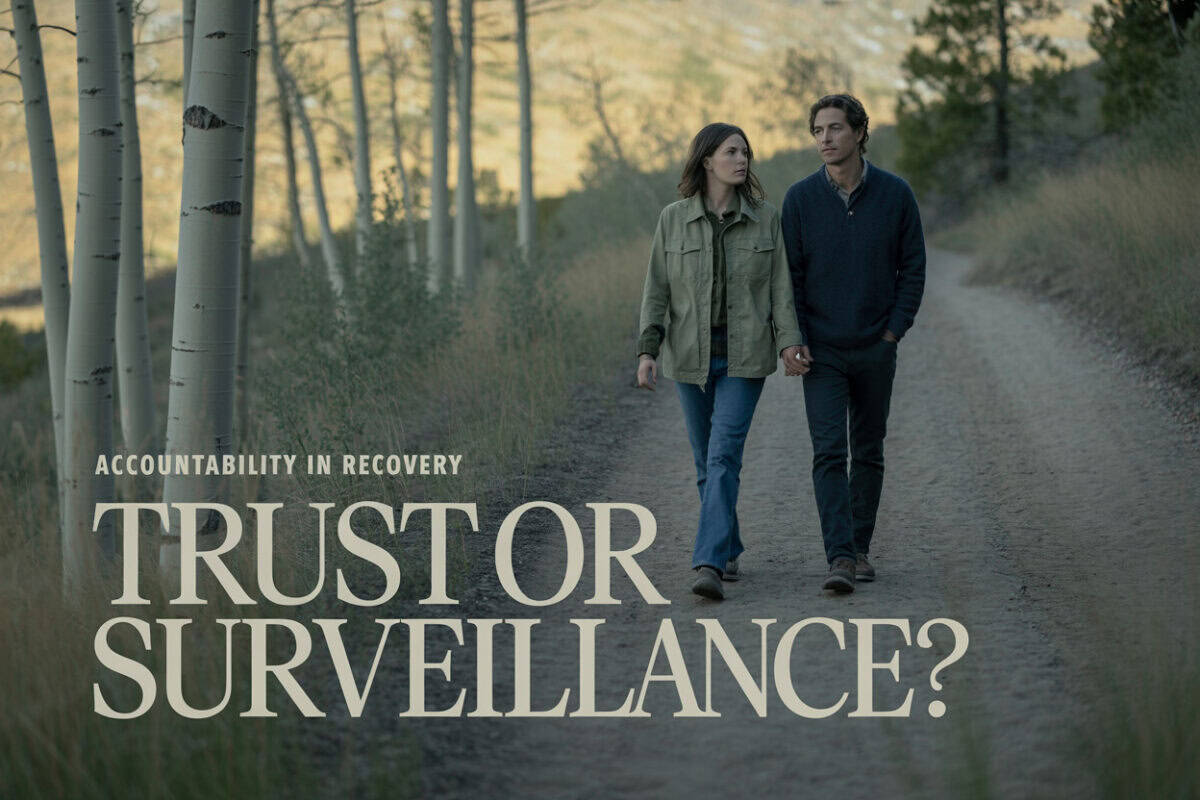
When a partner is early in recovery, the question comes up fast: should you track his phone, his location, his spending? The apps make it easy, and the impulse is completely understandable. After the lies and the fear, the idea of *knowing* feels like relief. But monitoring sits on a knife’s edge between healthy accountability and something that can quietly corrode the very trust you are trying to rebuild.
The case for transparency
In early recovery, transparency is genuinely healthy. A partner who voluntarily shares his location, opens his phone, or invites check-ins is demonstrating accountability — a willingness to be seen, which is the opposite of the secrecy addiction ran on. Many couples use tools this way successfully, especially in the fragile first months.
The key word is *voluntarily*. When transparency is offered by the person in recovery as a gift to rebuild trust, it tends to help. The dynamic shifts when it becomes something demanded, enforced, and policed.
Accountability is something he offers. Surveillance is something you impose. They can look identical on a screen and feel completely different in a marriage.
When a tool becomes a trap
Monitoring tips into toxic territory when it starts running your life instead of supporting it. Warning signs:
- You check obsessively and feel panic, not peace, when you can’t.
- His recovery has become your full-time job to enforce.
- The tracking is secret, or kept going long after it was meant to.
- It has become a way to catch him rather than to feel safe.
At that point the app is no longer protecting the relationship — it is feeding your anxiety and casting you as the parole officer in your own marriage. That role is exhausting, and it can actually undermine his recovery by making sobriety *your* responsibility instead of his. Groups like Al-Anon exist partly to help loved ones step out of that trap.
A healthier frame
Real accountability in recovery comes from his program, his sponsor, his therapist, and his own honesty — not from your surveillance. Monitoring tools, if used, work best as a temporary, mutually agreed support with a clear purpose and an expiration date, not a permanent condition.
It also helps to tend to your own healing in parallel. Rebuilding a healthy relationship means both people doing their own work — which is exactly why we extend support to loved ones, not just the men in our care.
If you are wrestling with where the line is, you are not alone, and you do not have to figure it out by yourself. To learn how Valiant Living supports families alongside the men in our program, call (720) 669-1285.
Frequently asked questions
Transparency your partner offers voluntarily can rebuild trust, but monitoring you impose and enforce can become controlling and harmful. If it’s used at all, it works best as a temporary, mutually agreed support.
When you check obsessively, feel panic rather than peace, keep it secret or open-ended, use it to “catch” rather than feel safe, or make his recovery your job to enforce.
His program, sponsor, therapist, and his own honesty — not your surveillance. Making sobriety your responsibility can actually undermine his recovery.
