Sometimes the addiction didn’t start with a drink.
It started with a hit.
A football collision.
A car accident.
A fall.
A concussion that “wasn’t a big deal.”
Then something shifted.
Impulse control weakened.
Mood changed.
Risk tolerance increased.
Substances followed.
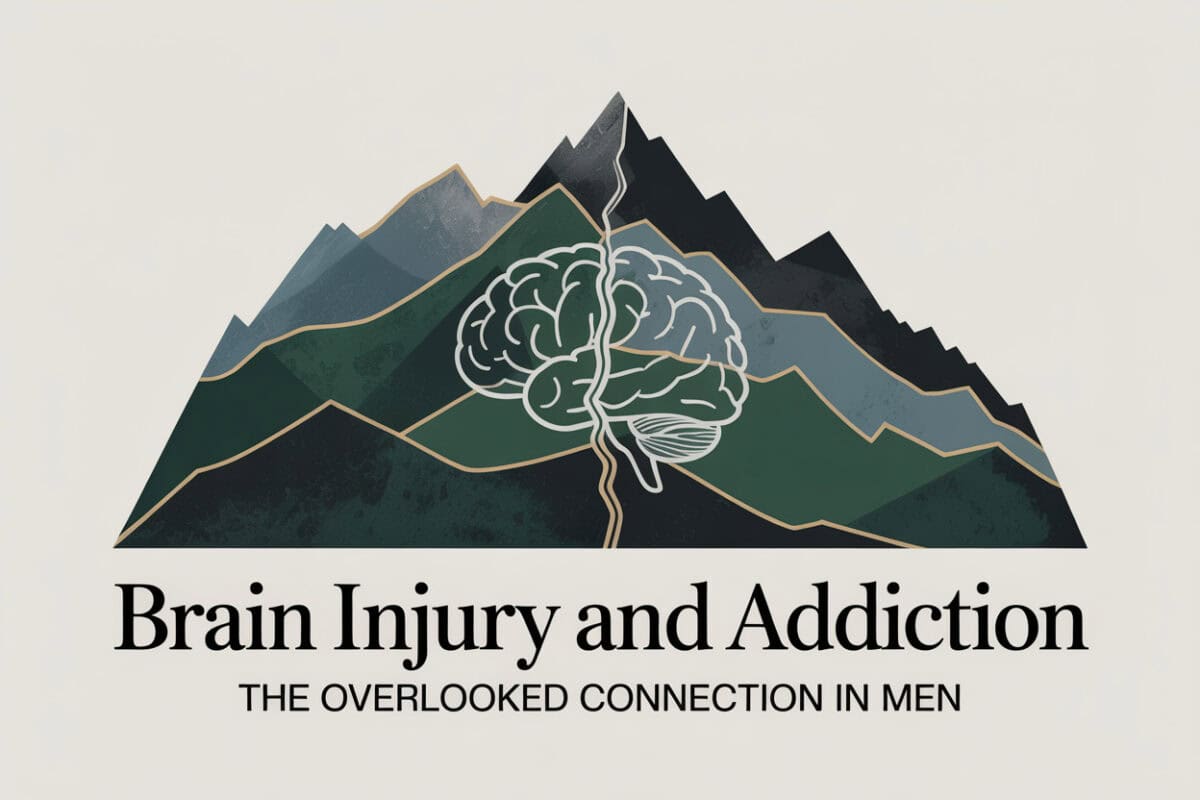
Traumatic Brain Injury, or TBI, is one of the most overlooked contributors to addiction in men.
WHAT IS A TRAUMATIC BRAIN INJURY?
A traumatic brain injury occurs when an external force disrupts normal brain function.
It can be:
• A diagnosed concussion
• Repeated sub-concussive hits
• A fall
• A car accident
• Military-related trauma
Many men never receive proper neurological follow-up after mild TBIs.
But even “mild” injuries can impact:
• Executive functioning
• Emotional regulation
• Impulse control
• Risk assessment
• Dopamine regulation
The same systems involved in addiction.
HOW TBI INCREASES ADDICTION RISK
When the frontal cortex is weakened, impulse control decreases.
When emotional regulation is impaired, substances become coping tools.
When dopamine signaling is disrupted, risk-taking increases.
The result?
Higher likelihood of:
• Alcohol misuse
• Opioid dependence
• Gambling addiction
• Risk-based behaviors
• Pornography addiction
The behavior may look like rebellion.
Neurologically, it may be injury plus addiction vulnerability.
Learn more about how our men’s program addresses neurological recovery here:
https://www.valiantliving.com/our-program/
WHY MEN ARE AT GREATER RISK
Men are statistically more likely to experience:
• Contact sports injuries
• High-risk occupations
• Military service-related TBIs
• Risk-taking behaviors
Combine that with cultural norms that discourage emotional vulnerability, and untreated TBI can quietly fuel addiction for years.
Families often say:
“He wasn’t like this before the accident.”
That observation matters.
THE ROLE OF STRUCTURED RESIDENTIAL TREATMENT
When TBI and addiction overlap, treatment must account for:
• Slower processing speed
• Executive functioning deficits
• Emotional volatility
• Memory challenges
• Increased impulsivity
This is why structured residential care is often more appropriate than outpatient settings in these cases.
At Valiant Living, we provide:
• Structured environment
• Predictable routines
• Brotherhood accountability
• Clinical therapy
• Process addiction treatment
• Nervous system stabilization
Learn more about our Colorado setting here:
https://www.valiantliving.com/location/
WHEN TO CONSIDER TBI AS A FACTOR
Warning signs that brain injury may be influencing addiction:
• Personality change after an accident
• Increased aggression or impulsivity
• Difficulty concentrating
• Emotional outbursts
• Escalation in risk behaviors
If addiction worsened after a head injury, it is worth evaluating both.
Recovery requires understanding the full picture.
If you are exploring residential treatment options, begin here:
THE BOTTOM LINE
Addiction is not always just behavioral.
Sometimes it is neurological injury layered onto emotional pain.
When brain injury and addiction intersect, willpower is not enough.
Men need structure.
They need accountability.
They need neurological stabilization.
That is what residential treatment is designed to provide.
