
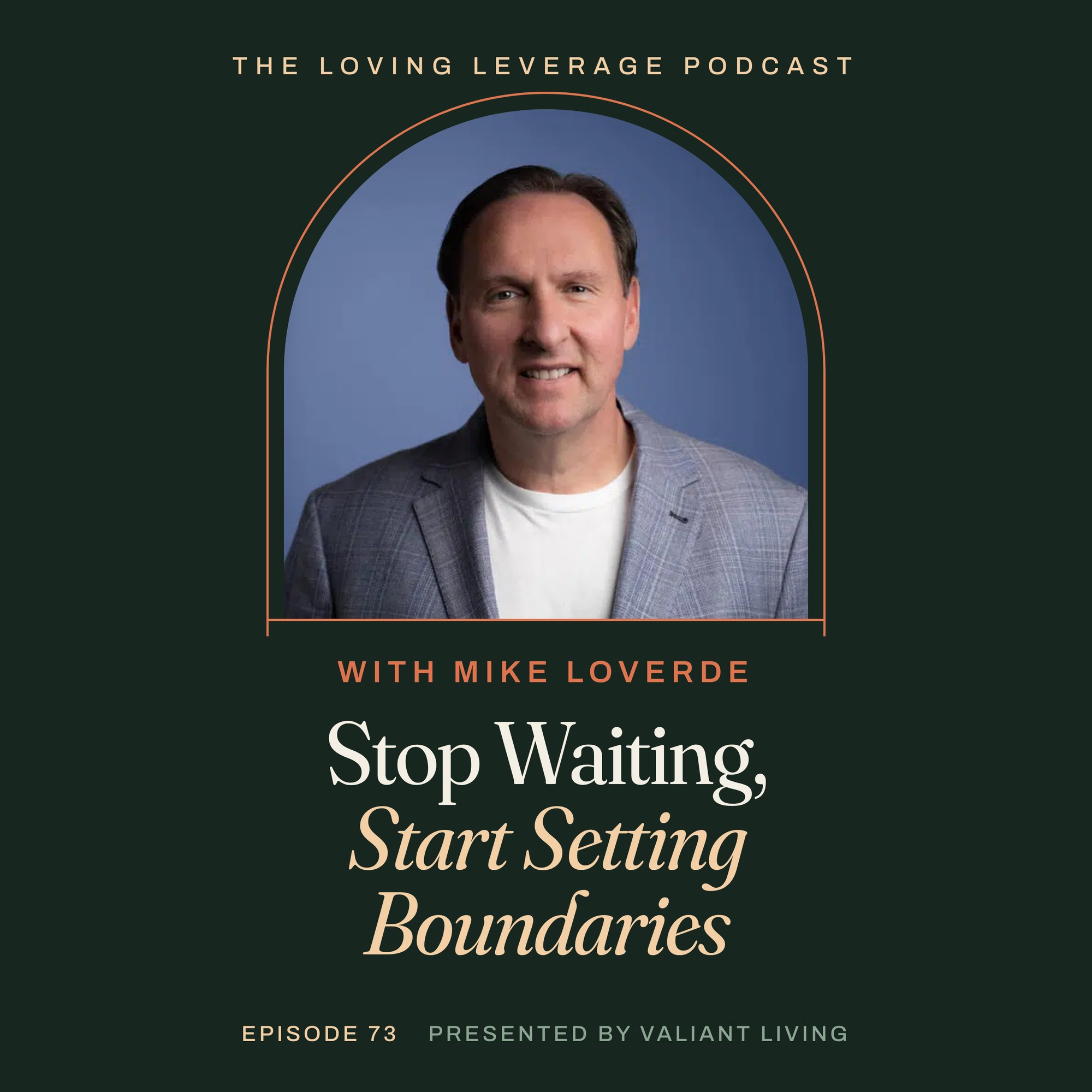
The Loving Leverage Podcast · Episode 73
Mike Loverde, founder of Family First Intervention, on why families don't have to wait for rock bottom, and what to do instead
Wait for rock bottom. Wait until he's ready. Wait until it gets bad enough. Families hear that advice constantly, and Mike Loverde says it quietly turns the whole family into what he calls a voluntary hostage: stuck in contemplation, weighing both sides, never moving to action, and paying for it emotionally, financially, spiritually, and physically.
Mike is the founder and Clinical Director of Family First Intervention. Addiction tore through his own family, an interventionist changed the direction of their lives, and Mike walked away from a finance career at Ameritech and Arthur Andersen to join that company. He founded Family First in 2009, earned a master's in Addiction Studies, and today leads a national team of interventionists who show up in living rooms at the hardest moment a family will ever face.
In this conversation, Mike and Drew get into why families block help even when it is available, the roles that keep a family system stuck, why reactivity is what the addiction feeds on, and how Family First rewrote the intervention letter to take out blame and shame. Mike explains what an intervention really looks like from front end family work through placement and aftercare, why families whose loved one says yes often struggle more than families who hear no, and why passing a drug test is not the same as changing. He closes with the line he gives every family: victims say why me, survivors say what's next.
Drew is an alumnus of the Valiant Living men's residential treatment program. If the man you love is in recovery from sex addiction, pornography, or gambling, or your family is healing from infidelity, you can book a confidential consult with Drew.
Watch the episode
Prefer to listen?
Chapters
About the guest
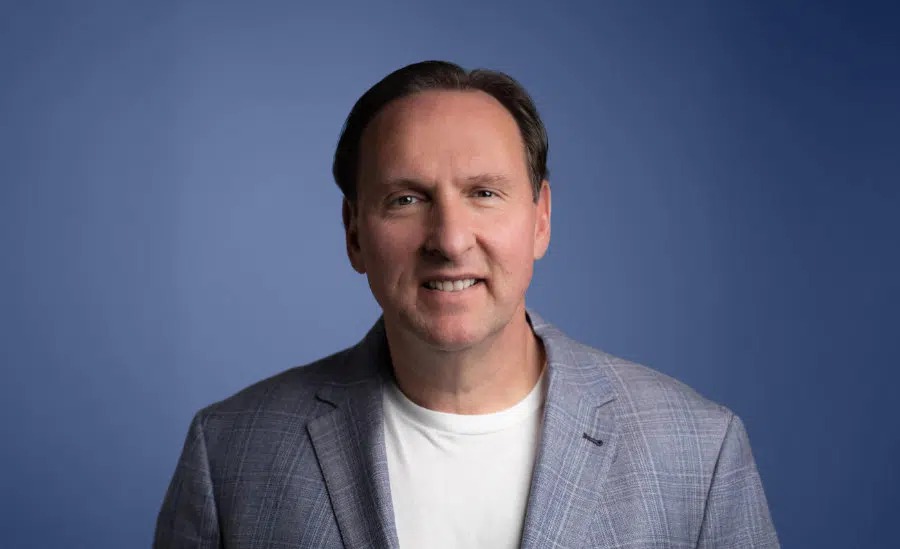
Mike Loverde, MS is the founder and Clinical Director of Family First Intervention, founded in 2009. His path into this work began when addiction tore through his own family and an intervention professional helped change the course of their lives. He left a finance career at Ameritech and Arthur Andersen to join that intervention company, later earning a master's degree in Addiction Studies. Mike teaches that families do not have to wait for rock bottom: they can change what they do now, find closure, and step out of the enabling cycle. He leads a national team of interventionists at Family First.
This is episode 73. The previous episode was Vanessa Scaringi and Kathryn Garland on when food becomes the new fix. Browse all episodes of The Loving Leverage Podcast.
Questions people ask
Mike Loverde says no. Waiting keeps the family stuck in contemplation and costs them emotionally, financially, spiritually, and physically, while the person using keeps getting the reactions they need to continue. The family can change what it does today, whether or not the loved one is ready.
Lowering your reactivity without withdrawing care. The person using feeds on emotional reactions, so the family practices responding calmly, holding boundaries, and letting consequences stand, while staying connected and ready to help the moment he says yes.
Family First starts with the family: background on the person and the system, who is actually willing to participate, and front end education on boundaries, reactivity, accountability, and why people fail in treatment. The meeting itself uses a letter without blame or shame. After placement, the team keeps working with the family through groups and counseling.
Don't send it. Reply with love, the treatment center's contact information, and a request to be told when he is ready. Mike's rule is that boundaries have to last longer than the manipulation. If you need help thinking through the next step, you can book a confidential consult with Drew at valiantliving.com/consult.
Drew Powell 0:06
Welcome to episode 73 of The Loving Leverage Podcast, presented by Valiant Living. I'm Drew Powell, recovery advocate and alumnus of the Valiant Living men's program, and this is the show about what it takes to move from addiction to connection.
Today's guest is Mike Loverde, founder and Clinical Director of Family First Intervention. Mike didn't come to this work from a textbook. Addiction tore through his own family, and it was an intervention professional who changed the direction of their lives. Mike was working in finance at the time, Ameritech, then Arthur Andersen, and he walked away from that career to join the company that had helped his family. In 2009 he started Family First Intervention, went back and earned a master's in Addiction Studies, and today he leads a national team of interventionists who show up in living rooms all over the country at the hardest moment a family will ever face.
Here's why I wanted him on. So much of what families get told is to wait. Wait for rock bottom. Wait until he's ready. Wait until it gets bad enough. Mike's whole approach says the opposite. The family doesn't have to wait on anything, because the family can change what it's doing today. We get into what enabling actually looks like when it's dressed up as love, why follow through matters more than any threat you'll ever make, what an intervention really is and isn't, and how a family finds closure and peace whether or not the man they love ever says yes to help.
If you're sitting in that waiting room right now, wondering if there's anything you can do besides hold your breath, this one's for you. Here's my conversation with Mike Loverde.
Drew Powell 1:37
Well, Mike, thanks for jumping on The Loving Leverage Podcast here, man. We just became friends five minutes ago, so I'm curious to get to know you. Thank you for your time today.
Mike Loverde 1:49
Thank you for having me.
Drew Powell 1:50
Before we jump in, there's a lot I want to talk to you about when it comes to interventions and the people you serve. The name of the podcast, Loving Leverage, is because we strongly believe in the love it takes for people to set boundaries and help people get healthy. A lot of times it takes a whole network of people around, in our case, a man, because we work specifically with men. It's not normally the man calling us saying, hey, I need help, I'm sick. It's usually a betrayed partner or a family member or a parent. So I'm super interested in the work you do, and not just that, but how you do what you do. But before we jump into that, I'd love to hear some of your story. I know your path into this work really started when addiction tore your family apart. If you're willing, would you take us back to that season? What did that look like from the inside?
Mike Loverde 2:58
Before this ever started, I graduated with a degree in finance. I worked for Ameritech in Illinois, which is the old Illinois Bell, and I was on site at Arthur Andersen, the big five accounting company, doing finance for the telecom department. The reason I preface it that way is I never thought in a million years I'd be doing this. When addiction ravaged our family, it crippled the entire family system. My mom and my dad were completely not on the same page, siblings were not on the same page, and they fought it for the longest time. They found an interventionist, and he came in and educated our family and showed us things nobody had ever thought of. It's not about somebody wanting it, it's about why they weren't getting it. With the boundaries and the accountability, our loved one went to treatment, and they left the next day. My mom called hysterically, and the whole family was in disarray. They instructed her, do not bail them out. You can't react. You have to be stoic, like you're out of tears, because the more reactivity you provide, the worse they're going to get. To this day, for the family, it's a long distant memory. That company ended up calling me. I ran into the owner and they asked, would you ever consider doing this? I went and worked for them, went back to school, got my Master of Science in addiction studies and counseling, worked with them for three years, and then I incorporated Family First Intervention in 2009. We built a national practice with interventionists all over the country helping people.
Drew Powell 4:57
It's incredible. Tell us a little more about Family First specifically, and right here at the top, how do people partner with you? How does this work when families call you for help?
Mike Loverde 5:15
It's funny how you started this podcast. Ninety percent of my calls are from women. Very rarely does the father or the man call. And coincidentally, when interventions don't happen, it's usually because one of the men in the family, dad or the oldest hero brother, shoots it down. The women want it, the men don't, and it falls apart and people don't get better. When people call our office, I'll let you in on a little secret. I'm in beast mode, I want to help these people. But when I'm on the phone with a family, I'm not initially listening for strategies to help them. I'm looking for who is going to destroy this and sabotage it, because there are always at least one or two family members who are going to override the group. And at the end of the day, it's not just them overriding the group. It's what we want at our core. If I ask the same question of twenty people, it's because I want somebody to fit my underlying narrative. That's why AI is so devastating to mental health and addiction. Families and people are not on there looking for the solution. They're looking for validation of the one they already have inside them. It's become the greatest codependent shortcut giver in the nation. Don't send them to treatment, put them on Ozempic. Don't get them sober, just give them naltrexone. Not that those things don't help, but people at their core, unbeknownst to them, are searching for what they really want, which is avoiding discomfort. That's what we're up against when the phones ring. Once we get past that, we can come into your living room and save your loved one's life. Getting people to treatment is not difficult. Getting families to let us come in and do this, I thought calculus in my finance studies was hard. That's third grade math compared to getting a family on board.
Drew Powell 7:03
What you're saying resonates so deeply with me. Over the last few months I've stepped into some new roles here at Valiant where I have the honor, and I mean that, it's a sacred honor, to step into the middle of some of these situations. The number one thing that has been most shocking for me on these calls, and feel free to course correct me, is that the trauma for some of these family members is so deep. I've been surprised at how difficult it has been for them to let us in to actually help. They'll call, and they've got a loved one who is sometimes in the other room dying. It can be really bad. And then when it comes down to actually booking the flight, actually doing the thing, sometimes the hardest person to get is not the addict. It's the family member who's pushing back. I know it's a trauma response, but that has been shocking for me, Mike. You'll have a guy who's ready to go, and now I'm trying to convince the family that it's the right thing. From your perspective as a professional in that space, and we have a lot of loved ones who listen to this podcast, what's happening in that moment? They reach out for help, the help arrives, and then there's this last minute barrier to going through with it.
Mike Loverde 8:49
The fear of the unknown. The fear of change. The fear of betrayal. Feeding the maladaptive family role that's been acquired. Letting go of your role of being needed. Losing your sense of purpose. Losing your martyrhood, your victimhood mentality. Losing your role as the hero. It's not about them getting better. It's about what you're going to lose if they do.
Drew Powell 9:12
Say that again. That is a powerful line.
Mike Loverde 9:19
It's not about them getting better. It's about what happens to you if they do. Families, unbeknownst to them, and nobody's malicious here, can't imagine a world where things are different. I always go back to The Shawshank Redemption, when Brooks is being paroled after fifty years, and Morgan Freeman says these walls are funny. First you hate them, then you get used to them, and after enough time passes, you depend on them. When I did my internship at Stepping Stones in Joliet, Illinois, every client was an Illinois Department of Corrections inmate. I saw them come off the van in the sweatsuit with the shackles. The longer they had been incarcerated, the more they wanted to go back. They didn't know what their lives would look like in the free world. They were afraid. When mom gives that guy fifty bucks, it's not about the fifty bucks. My eleven year old twins can tell you what he's going to do with it. I want to know why mom feels the need to give him the fifty bucks. That's where this whole thing has broken down. Addiction, as you said, is a trauma response, but it's also dripping in generational family of origin dysfunction. Families don't hear our solution. They hear us taking away theirs, even though theirs is maladaptive and unsuccessful.
Drew Powell 10:32
When you unpack it like that, it makes so much sense. But when you're in the middle of it and emotions are flying high, it's different. You said it so matter of factly, and I don't think anybody listening would disagree. But when it's you in that chair, and again I'm using women because we mostly work with men, but it can be any betrayed partner, a lot of them are looking at a financial reality. Maybe this man was the breadwinner, and they don't know what life looks like on the other side of this. They've got real concerns. Providing for their kids. So they'd rather hold on to what they know than turn loose and face what's on the other side. And some of it is very real, like provision. What do you say to families who are saying, if he goes and gets help, I've got some realities on the other side of this I might have to face? I might have to go back to work.
Mike Loverde 11:54
You help them understand that until that person is in treatment, nothing can be solved. You're trying to have a conversation with the ADT alarm on full blast. You can't. You have to get the intended patient out of there for things to start sorting out. They're standing on a throw rug trying to pick it up at the same time, saying I think I can, I think I can, and they can't. But you hit it on the head. Some of the hardest interventions we've ever had, and almost every time I leave the spouse out of it, because the spouse is always the default martyr. I could say, I'm doing this for free, I'm paying for the treatment, I'm guaranteeing you a hundred percent success, and he or she won't even hear me. What about this? What about that? It's all about them. When that person gets well, it's not so much the fear of the things you're suggesting. It's, how am I going to survive no longer being the center of attention as a victim? And they don't realize they're doing this. When I talk about family roles, nobody wants the label or the behavior. They've defaulted to it. It's family systems theory, and it's unavoidable. The intended patient creates chaos and drama, the primary enabler reacts to it, and everybody underneath that enabler strives for the attention that's now lacking, because the enabler has all their eggs in the basket of the intended patient. People need love and nurturing, and they're not getting it. So the hero becomes a perfectionist, the opposite of the substance user. The scapegoat follows in the footsteps of the substance user. The lost child goes and hides, even though they really want to be found. The mascot cracks jokes to bring a sense of normalcy. These family roles become a drug to these people, and they rely on them to get through the turmoil. But when you bring it up, you're just a salesman. No, this is clinical protocol. A lot of the time we don't introduce it early, but this is the underbelly of what's going on. None of these intended patients want help, because they don't have to get it, and they're also not done destroying and inflicting pain on the very people they love the most, the people they feel are the cause of the pain they're escaping from.
Drew Powell 14:17
Wow.
Mike Loverde 14:17
And then mom says, I don't want to betray them. Well, they're acting out because they already feel betrayed. It's insanity. So yeah, it's hard.
Drew Powell 14:28
This is amazing, Mike, because it's so true. What I was thinking is that this is all happening at the subconscious level, right? They're not thinking it. This is what they've had to develop to survive the system. Is that accurate?
Mike Loverde 14:48
Put it this way. When we go out there and open the book and get to the family roles, half my interventionists have to skip over it, because they know they'll get attacked and lose the room. It is subconscious, but when you draw it to their attention, it gets hairy.
Drew Powell 15:08
So no one's thinking, I want to be the victim, I want to be the martyr. It's just what they've naturally developed to exist in this system.
Mike Loverde 15:20
In their defense, it is not their fault that they've defaulted to these family roles as a result of the chaos and the drama bestowed upon them by the substance user. We're human beings. We're looking for an escape, and family roles in these situations are the escape. So they're not bad, they're not wrong, they're not malicious, and they're not intentional. But they are present.
Drew Powell 15:44
Let me ask you this. A lot of families are told to sit tight and wait for rock bottom. For people listening and not watching, Mike's already shaking his head before I get the question out. Why do you think this advice is so common, and where does it break down for you?
Mike Loverde 16:03
Because it doesn't help the substance user, and it destroys the family. Listen, if you want to get high or get drunk, unfortunately you're allowed. But leave these people alone. The family that's involved is a voluntary hostage. Why aren't we telling families that they don't have to wait until he hits bottom for them to take action? Why is it all about the substance user? Why can't we make it about the family first? Hence the company name. I'm not trying to plug it, but that's where it came from.
Drew Powell 16:33
No, that's great.
Mike Loverde 16:34
Nobody asks, why does it have to be all about the substance user? Why do we wait for them? When is it that we can take our lives back, even if they decide not to?
Drew Powell 16:47
I've never thought of it that way, but that is so true.
Mike Loverde 16:55
Sit back and let them keep stealing from your purse.
Drew Powell 16:57
Right. It plays into the system where the addict becomes the center of the universe. Part of what you're saying is so empowering, because it's, wait a minute, why am I still orienting my life around this person, as opposed to setting those boundaries early? That person's rock bottom might also mean my rock bottom, so why do I have to wait if I'm taking the journey with them? Am I hearing you correctly?
Mike Loverde 17:33
A hundred percent. When you look at the stages of change, the second stage is contemplation, and it specifically says the patient must acquire ambivalence, which is seeing both sides of an argument. Unless the consequences of a situation are greater than its benefits, the person will not move forward through the remaining stages of preparation, action, and maintenance. So when you tell somebody to wait and do nothing, you have them in a holding pattern in the second stage of change on both sides. You're not helping them, you're not helping them be held accountable, you're telling them to remain codependent, you're telling them not to set necessary boundaries, and you're telling them to stay in prison when they don't have to. I don't know where we got this. It isn't about when that person wants it. It's about when they have to get it. That family is feeding off one another. Just stop the reactivity. For somebody to tell you that you can't do that is a thousand percent wrong, and there's no debate on it.
Drew Powell 18:42
This is an on the nose question, but just so you say it out loud, what does waiting actually cost a family?
Mike Loverde 18:52
It costs them everything. It takes away everything they have emotionally, financially, spiritually, mentally, and physically. Who can sit there and watch a child die from a heroin addiction because society, uneducated on the topic, says that's just the way it is? I can't wrap my head around that. I'm a math guy, and that doesn't work.
Drew Powell 19:26
That equation doesn't add up, does it?
Mike Loverde 19:28
It doesn't add up, because people are looking at it with blinders on. They're looking at the poor victim substance user, and in many cases rightfully so. But what about the family? There are times I've asked a mom, how are you? And she'll start crying and say, nobody has asked me that in the longest time. When the phone rings, it's how's John? How's Sarah? Wait a minute. How am I? What about me? I'm the one living in hell over here. But you just have to wait.
Drew Powell 20:10
When you put it that way, it doesn't make any sense. The way you're saying it is so simple, but it's so often missed and hard to practice. I'm sure there are people listening right now coming out of their chairs saying, thank you for finally saying that. And speaking from the addict side of things, when I was in my addiction, I didn't have the capacity to empathize. I wasn't asking how everyone was doing. I was the vortex sucking everybody into my little ecosystem, and I didn't have the ability to ask, how are you doing? How is this affecting you? I'm sure there are so many people in the orbit of an addict who for the longest time nobody has seen, put first, asked how they were doing, or told, you don't have to live like this. So how do you teach families what they can change or do now? For the wife or the parent listening who's been waiting for months or even years, what's the first thing you'd want them to change?
Mike Loverde 21:30
Reactivity. The addict is feeding off your reactivity. The more you react to them, the more they're going to do it. The true drug of choice for a substance user is avoiding discomfort and getting a rise out of the people who love them the most, because they see those people as the reason they are the way they are. When we reduce that reactivity and get families to stop providing comfort and learn to successfully detach with love, the changes are astonishing. The average client has been to treatment seven times, and the family will always say, well, treatment didn't work. Really? Where did they go when they left? Well, we let them come home. Let's build on that.
I remember I told a mom one time, I'm going to send your son to the second best treatment center I know. She looked at me puzzled, and I said, the first treatment center is your house. We've got to shut that one down. If I took anybody else in the world with an addiction and sent them to you, would that person get better? I've never had anybody say yes. Why don't you sit with that? And then the excuses pour out. They're not even their excuses. They're built in excuses from the patient. Families have ten times more excuses for me on the phone and at an intervention than we ever get from the patient when we get there. They aren't even operating for themselves anymore, between the patient telling them what to believe and society backing it up with you've got to wait. No wonder we're in this mess.
Drew Powell 23:14
Do you think there's some shame at play? How could we have let it get to this point? With the excuses, what's coming up for me is that people may feel a certain amount of shame, maybe not complicit, but something. What are your thoughts on why the excuses happen?
Mike Loverde 23:49
A feeling of failure. Certainly guilt. Some shame. Knowing in their core a family secret. If somebody was molested when they were eight and somebody in the family did it, you don't want me coming into your living room, because God forbid that comes out. You've got to remember, human behavior is not defined by the behavior itself. It's defined by a reward system. People engage in behaviors, even maladaptive ones, to receive a benefit. So the question isn't why. The question is, what are you avoiding by not doing this? Because you're sacrificing your loved one for your own needs, to bury a secret or avoid something. There's a benefit in not addressing this. What is it? When we find that out, things change.
Drew Powell 24:38
I'm curious how the phrase loving leverage lands for you. Our founder, Michael Dinneen, talks about this all the time. Boundaries as compassion, follow through over threats. We've all seen the shows on A&E about intervention, coming in with a big baseball bat, and people think, I can't be that cruel. We have this philosophy of loving leverage, where sometimes those are really hard choices, but they're born out of a deep love for the person. How does that land for you, and what is your approach at Family First?
Mike Loverde 25:32
You nailed it, and I love your founder's follow through over threats. For every action there's a reaction. If we just throw boundaries at the patient, no patient is going to say, wow, they did this because they love me and want to save my life. It's going to hurt them if it isn't presented properly, because they're going to weaponize it to confirm their belief that you are the problem. The presentation has to be different, so they take accountability for why those boundaries are set. It's like a Fourth Step. Who am I resentful at, but also what did I do to keep the ball rolling? We have that mindset in there. If you just cut little Johnny off, he's probably not going to own why that happened. But if you present little Johnny with another solution and he doesn't take it, that's now on him, not you. That's why families can't intervene themselves. The presentation, the art of communication, and the reactivity are crucial. Loving leverage, a hundred percent. There's never any fighting here. Sometimes they try, but you defuse it. You have to remember, when your words come out, how are they going to be perceived by the other side? Even if it's perfectly said, how are they going to feel emotionally? When dad says, get out of here, with the intention of helping his son, I know that'll backfire. Sometimes it works, but these patients love their families. They're broken people. Let us glue you back together. Don't make it worse than it already is.
Drew Powell 27:26
That's why I appreciate the work you do, Mike. When emotions are running high, we need someone like you to come in and help us say what we really want to say in the best way possible. The message is often the same. It's the delivery. A lot of people lead with, you've got to go get help, instead of talking about how the behavior impacted them and made them feel. We've found that sometimes the greatest leverage is a loved one actually hearing the effects of their behavior on someone they love, as opposed to something that puts them on the defensive and feels like an accusation. Those things may be true, but these addicts already know they're messing up. They're already carrying shame. Is that true in your approach? Someone like you comes in to help shape the narrative. Truth can be told a number of different ways, and your team helps them say it in a way that gets the best results.
Mike Loverde 29:21
What we do differently, and I know this from just about every other intervention company, is we changed our letter writing format a long time ago, and it changed the outcomes profoundly. Most interventionists start with a paragraph about how much we love you. Then the second part, like the show, is you did this, this, this, and this. Guilt and shame. We don't do that. We completely removed it. That's the family's opportunity to apologize, to own their mistakes, to express their sadness for how they've handled things. We have had meth addicts with their eyes popping out of their heads cry. I never had that with the old letters. They're waiting for that attack, and it never comes. It's huge.
Drew Powell 30:19
So you're starting with ownership. Taking responsibility for your part in it completely defuses the addict's defenses, it sounds like.
Mike Loverde 30:33
When I say always, I mean it defuses. It doesn't always mean they're happy. But if it doesn't defuse it, it certainly doesn't escalate it.
Drew Powell 30:42
Because now they don't feel like they're being attacked.
Mike Loverde 30:47
Correct. And we're there to reduce the family's reactivity if they try to push buttons and take the bait. We keep the focus on the behaviors, not the substance. They can always argue, I'll take a drug test right now. We're not here for that. We're here for your behaviors. They can't argue the behaviors.
Drew Powell 31:12
Let me ask you this, and forgive me if I struggle with the wording. I feel like families sometimes swing the pendulum from enabling on one side all the way to abandoning on the other. I don't want to enable, so I'm going way over here. What does the middle look like, and how do you help families find it and stay there, where they're not abandoning and they're also not enabling? There's a lot of gray area and tension in the middle.
Mike Loverde 32:02
Detachment and accountability. Like your founder said, follow through, not threats. Even in my book, it says a person only refuses help for two reasons. One, they don't want to stop using substances. Two, they don't think you're going to follow through. That's it. They're not done getting high because they don't have to be, and they don't think you're going to follow through so that they have to. They're going to test you. And I always tell families, if your boundaries last longer than their manipulation, you're going to win.
Drew Powell 32:38
That's great. Where do you see families accidentally sabotage the very change they're looking for? The person's going to push back and test that boundary. How do you help them set a boundary they'll actually keep when the resistance starts?
Mike Loverde 33:01
Mike, he said he'll go to treatment tomorrow if I give him fifty bucks. No. Don't give him fifty bucks. Text him and say, I love you. Here's the name and number of the treatment center. Let me know when you're ready. Reduce that reactivity. Continuously shut it down so they know you're not going to take the bait, because they're going to keep pushing your buttons if they have the slightest inclination that you will. It's about retraining the family's brains. They've been on this trajectory so long, they almost can't comprehend the new one. It's like getting sober. You have to change everything, and families often don't understand that they do too. So that middle ground is love, detachment, accountability, and boundaries, and stick to it. If you ground your kids, and they come out with the puppy dog eyes and you fold, you do that ten times in a row, they're going to laugh at you. We're retraining toddlers here.
Drew Powell 34:02
It's so true. I've got four kids, and my kids know when I'm being for real and when I'm not going to hold the boundary. That same principle is true all the way through adults. We tell betrayed and traumatized partners all the time, your addict loved one knows when you're for real. When my wife told me no more lies, I could hear it in her voice and see it in her eyes. She was done. I'm a master manipulator, and I knew she was not bluffing. Part of the reason I went to treatment is because of that. I thought, she's had enough. This is my shot. The addict knows when you're not going to hold the boundary. It's a wake up call when you finally say, that's it, I'm done. So that's powerful. I'd also love for you to speak to the stereotype. When you hear interventionist, culture has shown us a living room ambush. If someone calls you today and says, I've got a loved one and I think there's a problem, walk us through what that process looks like with you and your team, pre and post.
Mike Loverde 35:54
First I have to get the background of the patient, then the background of the family, and I have to see who's actually on board. Everybody says, oh, we're all on board. That has never once been true. Sometimes I can get mom and dad on the phone and set up an intervention. Sometimes I have to bring in other family members. There's a lot of work on the front end to help them understand what we're going to do. When therapists say these are ambushes, well, first of all, your loved one ambushes you every day in some capacity. Now it's your turn. But it isn't an ambush. It is a loving, caring, life preserver throwing act. And it is scary. I will never deny that. The intervention scares people because of the fear of the unknown, change, and the loss of control, or the illusion of it. We have to get them through that, set up treatment, set the dates, and go out and open our manual. We describe why people fail in treatment. Most people go to treatment to get their stuff back. I call it the three inning player. Wife back, check. Car back, check. Job back, check. They address their symptoms and not their causes, because they don't have to. We discuss boundaries, reactivity, accountability, the letters, the consequences, and then we prepare them for the ongoing support. Once the intervention is over and we transport that person, we provide ongoing groups and counseling for the families.
What's interesting is, if you ever want to know why a family is afraid to do this, watch them react after we do. Every family says, what if they say no? Nobody has once asked me, how do we get them to say yes? Because no is their story. That's all they know. And I think deep in their core, subconsciously, they almost want that. Here's how I know. When we get a no, the families aren't nearly as upside down as the ones who get a yes. When we take that person to treatment, the better they do and the quieter it gets, the more we have to handle the family's volatility. I get more complaints out of successful interventions than out of the ones who refuse. The families can't handle the silence. They can't adapt quickly enough to the family system going back to health on its own. It's pulling them back and they're fighting to stay in the sick role, and they don't even know it. We've got one right now. We took him to treatment, he's been there ten days, a horrendous methadone case, and the oldest hero brother is a nightmare. My counselor Megan says, I think he wants him to leave against medical advice. I actually think he wants him to fail. And he does. Because as this guy's getting better, all of a sudden the brother isn't the shiny star in the family anymore. His overachieving isn't working now, so he has to pivot, and he's uncomfortable. It's our fault that his brother is successfully completing a methadone detox. He questions everything we do. But the guy's doing good.
Drew Powell 39:40
I don't mean to laugh, but it's so classic. It's so true.
Mike Loverde 39:45
And if you challenge him, he's sick. The brother is sick.
Drew Powell 39:54
It's a family disease. It's impacted everybody.
Mike Loverde 39:58
It's unbelievable. People say, I don't believe that. We deal with it every day. And the mom, the enabler, we take your kid to treatment and we take away your purpose and your role of being needed overnight. You're going to be uncomfortable. You're like an inmate who just got paroled. You don't know what to do.
Drew Powell 40:18
Let's dig one layer deeper. Say you do an intervention and it's successful, and you get a guy to a treatment center, maybe a place like Valiant for ninety days, maybe one of the great treatment centers across the country. What does the family need next? If you're coaching a family, okay, he's safe, he's doing his thing, now what for us in the months that follow?
Mike Loverde 40:48
Groups. They come to our groups regularly. And the biggest advice I give, and I think the best, is do not react to them individually. When they call you from treatment saying, my therapist said they don't even know why I'm here, I'm not like everybody else, I can come home, you don't go pick them up. You say, okay, I'm going to need to speak with your therapist and my treatment team. You don't react anymore. Just because you're not using doesn't mean you're honest. People think, oh, they're in treatment now, they're cured, they're sober. The definition of relapse is to return to a previous state. Just because you're not using substances does not mean your behavior has changed. You're dry. You can pass a drug test. Congratulations. In some ways you're worse than you were, because now you've got a clear head in that brain. And mom and dad say, oh my God, he looks so good, we should bring him home. Oh no. He's not good yet.
Drew Powell 41:54
He's just starting.
Mike Loverde 41:55
No, he's not good yet. Families don't understand that addiction is as powerful as any other fatal illness. They think because he looks good and sounds good, he is good, and that's not true.
Drew Powell 42:09
Mike, this conversation has been incredible. I'm going to link to your book and your organization. I want our families and our people to know about you and the work you do. I like to close our episodes with a similar question, and I like ending with hope, because there's a lot of pain and hardship out there. For the guy who might be listening in his car right now, feeling like his story is already written, or the loved one who's running out of hope, what would you want them to hear from you today?
Mike Loverde 42:52
You don't have to live this way unless you want to. You are a voluntary hostage, and you can get better if you want to. Let's not be victims. Let's be survivors. Victims say why me. Survivors say what's next. And you can do this. I empathize with how hard the change is, and we have to fix this the right way. It's not about whether they want help. It's about whether they have to get it. The environment is the number one predictor of outcomes, and if the family is in control, or largely in control, of that environment and those changes, then we can make those changes together. Families need me, but I need them. We do this together. We don't do this as individuals. If you want your family back, if you want to see dad with the grandkids again, you can be happy again if you want to be. You really can. You don't have to live this nightmare. I'm going on and on because there are a million things I want to say, but just let go. Abandon your old ideas and let us help you formulate new ones. We can fix this.
Drew Powell 44:12
Thank you so much, Mike. You can learn more about his work and his team at Family First Intervention, and I'll put the link in the show notes. What Mike laid out today is Loving Leverage in action. Love that refuses to look away, boundaries that actually hold, and a family that stops waiting and starts moving. That framework was created by our founder, Michael Dinneen, and if you're loving someone who's still stuck, it was built for you. Head to valiantliving.com to learn more, or if you're ready to talk with someone today, call us at 720-669-1285. That's the admissions line for our men's program, and a real person picks up. Show notes and links for this episode are at valiantliving.com/episode73. If this episode helped you, share it with the man who needs to hear it, or with the person who loves him. And subscribe so you don't miss what's coming next. I'm Drew Powell. From addiction to connection. We'll see you next time.
Get help
If you're sitting in the waiting room of someone else's addiction, you don't have to wait for rock bottom to start moving. Valiant Living works with men and the families who love them, and the Loving Leverage framework was built for exactly this.