
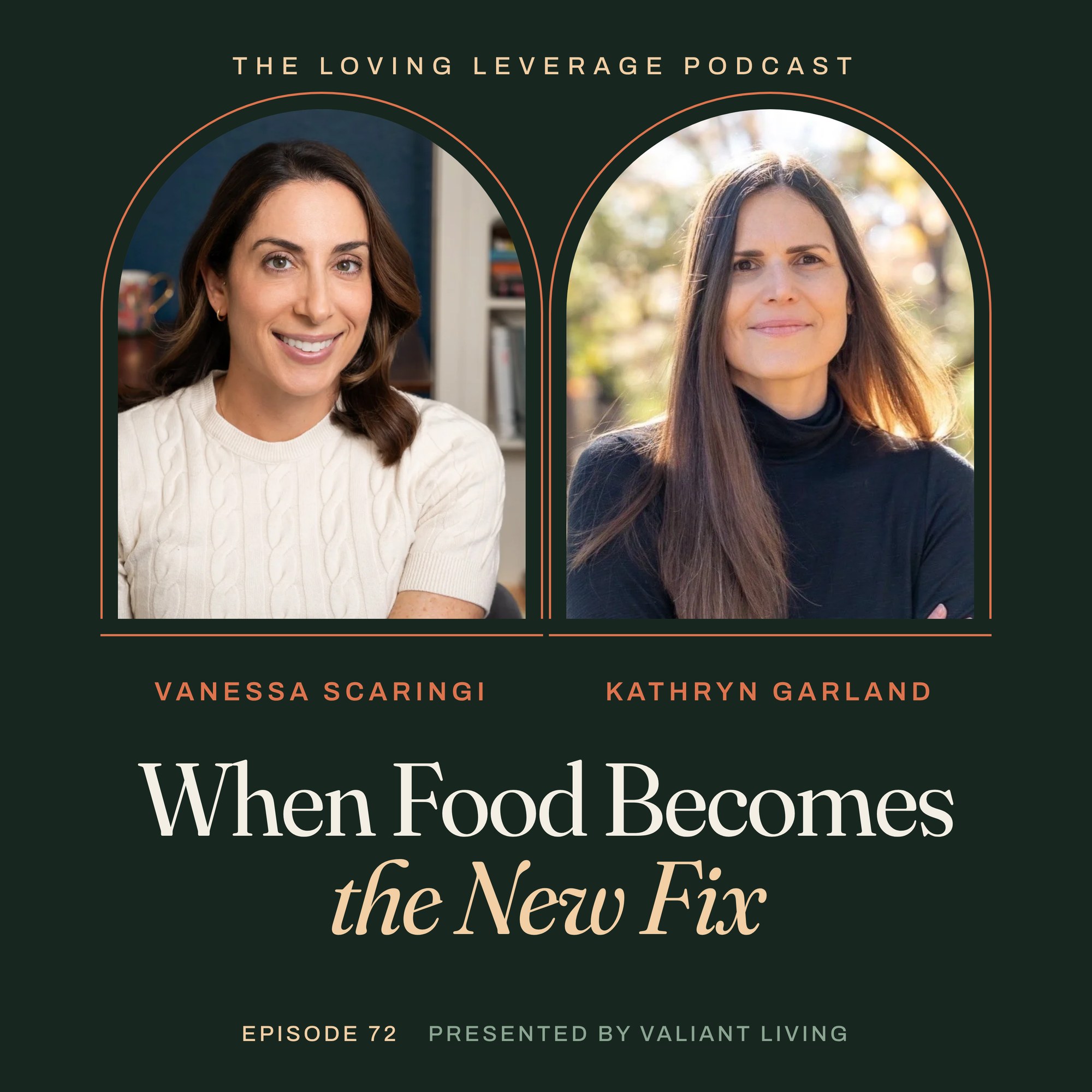
The Loving Leverage Podcast · Episode 72
Vanessa Scaringi, PhD, CEDS-C and Kathryn Garland, LCSW-S, CEDS-C on food as a process addiction, co occurring disorders, and what the body is really hungry for
Food can look harmless next to porn, alcohol, or gambling. That is exactly why it so often becomes the quiet replacement after a man gets sober. We see it all the time at Valiant: a man starts doing the hard work of recovery on the thing he came in for, and a new pattern shows up. Rigid dieting. Constant snacking. The sugar that took the place of the whiskey. The behavior changes, but the nervous system is still chasing relief.
In this episode, Drew sits down with Vanessa Scaringi, PhD, CEDS-C and Kathryn Garland, LCSW-S, CEDS-C, co owners of CALM Counseling in Austin and coauthors of the new book Hungry for Connection: Heal Your Relationships with Food and People in an Insecurely Attached World. Two eating disorder specialists opened a book about food with attachment theory and an epidemic of loneliness, and in this conversation they explain why: the way we eat and the way we attach to people are often mirror images.
They cover artificial attachments and why they leave us hungrier, what betrayal trauma does to a partner's appetite, the difference between food as a process addiction and the food addiction model, how to tell celebrating from numbing, diet culture and the thin ideal, overexercise and body image pressure on men, and a set of practical tools that starts with slowing down. They close on getting good at good enough.
Drew is an alumnus of the Valiant Living men's residential treatment program. If the man you love is in recovery from sex addiction, pornography, or gambling, or your family is healing from infidelity, you can book a confidential consult with Drew.
Watch the episode
Prefer to listen?
Chapters
About the guests
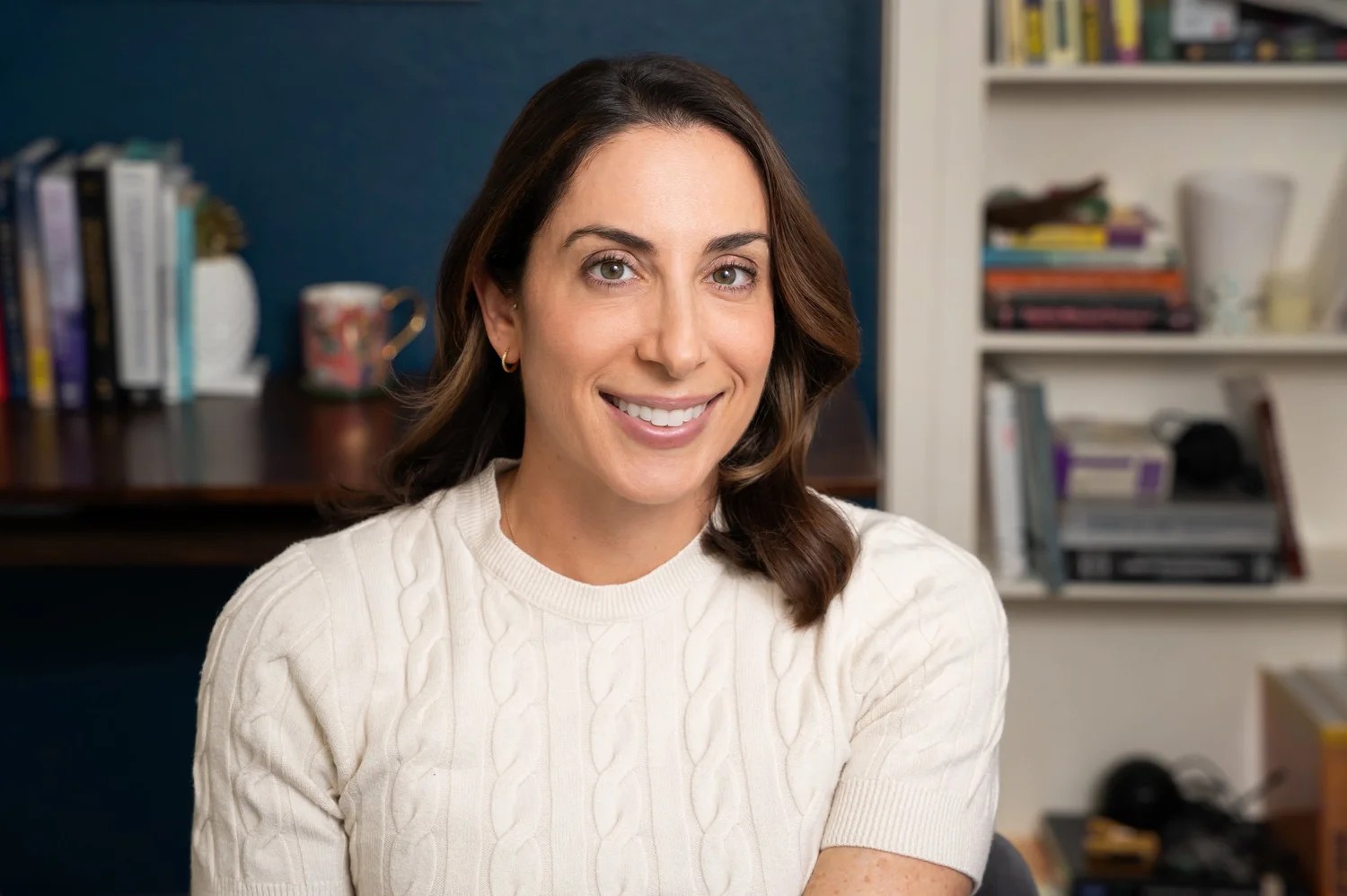
Vanessa Scaringi, PhD, CEDS-C is a licensed psychologist, certified eating disorder specialist, and IAEDP approved consultant with more than a decade of experience. She is co owner of CALM Counseling in Austin, Texas, and writes at vanessascaringiphd.substack.com.
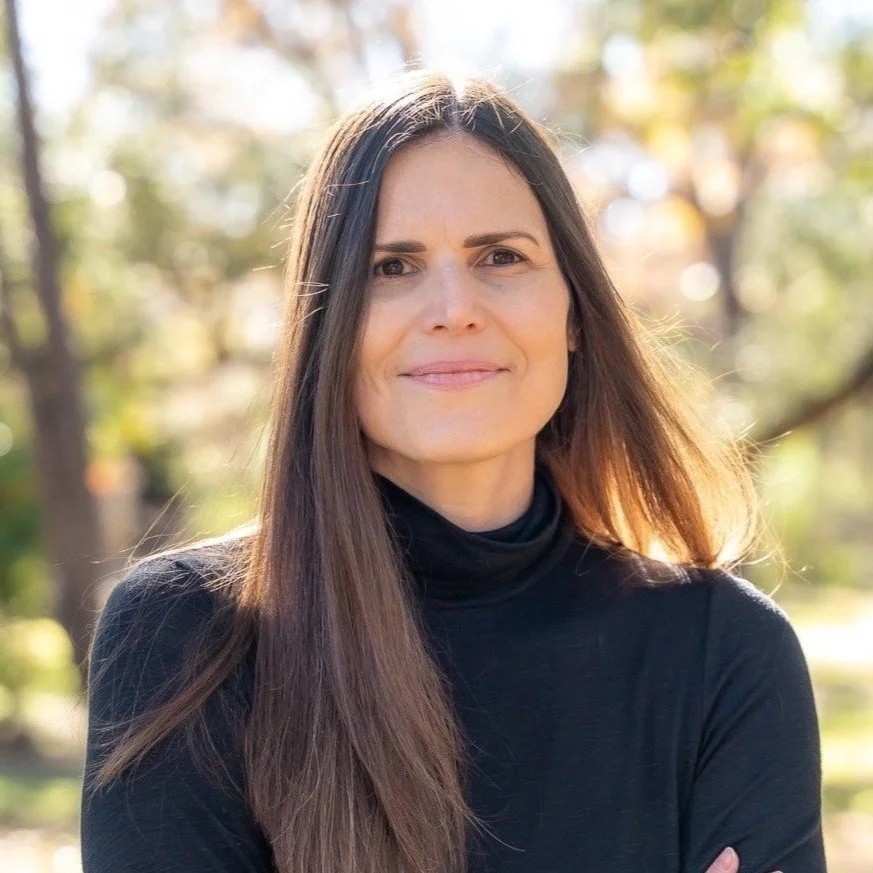
Kathryn Garland, LCSW-S, CEDS-C is a licensed clinical social worker and supervisor, certified eating disorder specialist, and IAEDP approved consultant with post graduate training in psychoanalytic psychotherapy and experience in higher levels of care, program development, and supervision. She is co owner of CALM Counseling in Austin, Texas.
Together they are the authors of Hungry for Connection: Heal Your Relationships with Food and People in an Insecurely Attached World (New Harbinger, 2026), with a foreword by Elyse Resch, MS, RDN, coauthor of Intuitive Eating.
This is episode 72. The previous episode was Jeanne Vattuone on partner sensitivity and the trauma nobody named. Browse all episodes of The Loving Leverage Podcast.
Questions people ask
Recovery removes the behavior, not the need the behavior was meeting. Food is available, legal, and socially praised when it looks like discipline, so it is a common place for the nervous system to go looking for relief. Clinicians call this a co occurring process addiction. Naming it early, and treating the connection wound underneath, is the work.
The science is still debated. Vanessa Scaringi and Kathryn Garland treat problem eating as a process addiction (a repeating cycle of unmet need, avoidance, and behavior) rather than a substance addiction, because the food addiction frame moralizes foods and can tip people from bingeing into fear and restriction. Either way, the relationship with food deserves clinical attention.
Slow down and get curious. Celebration is present, connected, and fits the moment. Numbing is reaching for something to make a feeling go away, usually quickly and often alone. Vanessa describes the goal as moving from external rules to an internal compass, and Kathryn calls the ability to tolerate that ambiguity living in the gray.
Both are normal responses to grief, shock, and a lost sense of safety. Talk about it with a therapist or trusted person rather than treating it as a willpower problem, and watch for food avoidance that starts in grief turning into control. Valiant works with partners and families; you can book a confidential consult at valiantliving.com/consult.
Drew Powell 0:00
Welcome to episode 72 of The Loving Leverage Podcast, presented by Valiant Living. I'm Drew Powell, recovery advocate and alumnus of the Valiant Living men's program, and this is the show about what it takes to move from addiction to connection.
This episode is a little different. We're talking about food. And if you're wondering what that has to do with a men's program that treats sex addiction, gambling, work, and substances, stick with me, because it has everything to do with it.
Here's what we see over and over at Valiant. A man comes in for one thing. Pornography, gambling, the affair, the drinking, the eighty hour weeks. He gets honest, he gets to work, and he starts to heal. And then somewhere in that process a different behavior shows up. For a lot of guys, it's food. Late night bingeing. Sudden rigidity about everything on his plate. The sugar that quietly took the place of the whiskey. Nobody flags it, because a man who's strict about his diet gets called disciplined, not sick. But the brain doesn't care what the behavior is. It's looking for the next thing to reach for, and food is a process addiction just like the one he walked in with.
That's co occurring disorders, and it's the reason I wanted Dr. Vanessa Scaringi and Kathryn Garland on the show. They're both certified eating disorder specialists and the coauthors of a new book called Hungry for Connection. Their take is that the way we eat and the way we show up with people are mirror images, and that food, substances, sex, and screens all sit on the same list of things we grab when real connection feels out of reach. We get into why one addiction so often trades places with another, what recovery looks like when you have to face your drug of choice three times a day, and what a spouse should actually do when the food stuff surfaces after everything else is finally out in the open.
If you love a man in recovery and you've noticed something new showing up in his life, or if that man is you, this one's for you. Here's my conversation with Vanessa Scaringi and Kathryn Garland.
Drew Powell 2:09
Vanessa and Kathryn, thank you so much for joining us on The Loving Leverage Podcast. I was just saying before we were recording how excited I was to have this particular conversation, because historically in my life, process addiction was a new term for me when I went to rehab four years ago. I had no idea about that. But one thing I could say for certain is that my relationship with food throughout my life was very problematic. I'll just start off by saying, as a kid, I grew up in a southern home. My mom is a fantastic cook. We went through a lot of trauma as a family growing up, and food was always the place where we found connection and medicine. We didn't address anything, but man, we could throw down. Mom could make a big meal and we'd gather and we'd laugh. So the pantry has always felt like the safest place for me to medicate. I'll shut up. I want you guys to introduce yourselves and talk a little bit about the work that you're doing, and then we'll dive into this. You've got a new book that I'm excited to let people know about. Congratulations on that. Kathryn, let's start with you. Could you introduce yourself and how you got into this work?
Kathryn Garland 3:26
Sure. I'm Kathryn Garland, and I'm a licensed clinical social worker and eating disorder specialist. I've been working with eating disorders essentially my entire therapeutic career, but worked in a higher level of care about a decade ago and started to specialize in eating disorders more. Vanessa and I co own a group practice in Austin where we work with a lot of folks who have attachment issues and disordered behavior with food.
Drew Powell 4:01
Awesome. Welcome. Thank you for being here. Austin is one city I still have yet to visit. I feel like I've been to every corner of America except for Austin.
Vanessa Scaringi 4:15
I'm surprised.
Drew Powell 4:17
I know. Aren't you guys the live music capital? We call ourselves the country music capital, or sometimes we say the music capital. I don't know if that's true, but you guys are the live music capital.
Vanessa Scaringi 4:32
I'm pretty sure Nashville's up there.
Drew Powell 4:35
I bring friends to town and they're blown away that it'll be 10 a.m. on a Tuesday morning and you can walk downtown and every bar has a band playing. Who's listening to music at 10 a.m.? But it's great.
Vanessa Scaringi 4:50
So I'm Vanessa Scaringi, and I'm also a certified eating disorder specialist and a licensed psychologist, and I've been in this field for quite some time. I found my way into wanting to work with disordered eating through research. I was doing some research as an undergrad and really enjoyed understanding what drives disordered eating. I was a women's studies major and I wanted to understand the context of this. We didn't have the phrase diet culture back then. When I started grad school, I really liked working with body image issues, and I worked in college counseling centers. Just being a person in the world, it's hard not to be affected by any of these issues. Being able to work one on one or in groups with folks who were willing to heal from them was really rewarding. So I kept on with it, and now I co own the practice and do all of this every day.
Drew Powell 5:51
Thank you so much for your work on this topic. One of the reasons I wanted to have you on the podcast is that at first glance someone might say, you guys deal with intimacy disorder and sex addiction and substances, all that kind of stuff. We have had people come in for eating disorders before, because that falls in the process addiction family. But we deal so much with co occurring disorders. We see so often, and this is true in my own story, that when I got sober a little over four years ago, I put on almost 80 pounds, because the things I was getting sober from, I went back to medicating with other things that felt safe. In some ways, when you look at heart disease and some of the other things, it can be just as damaging, just as deadly as some of these other ones. But it seems a little more socially acceptable. So we see so often that the men who come through our program have eating issues pop up post getting sober from whatever they came in for, and sometimes they don't even have a name for it. They don't know why this is happening. I'd love to hear your perspective on that. But before we get to that, let's talk about your book. Why did you write it? Why now? Tell us the why behind the book.
Vanessa Scaringi 7:34
The book is called Hungry for Connection. We often share the story of being in COVID times, doing therapy, and having the unstable connection message pop up on the screen when you're in session with someone and they're sharing something really deep. It reminded us that our connection with people in this world is really tenuous, especially in that moment. As a play on that, we started thinking about writing something related to it, because it felt so powerful. Then we presented on attachment theory at an eating disorder conference and it was really well received. We used both of those as motivators to dive into how attachment styles, and insecure attachment in this world, lead to disordered eating. We see that with our clients all the time, so we wanted to have something tangible.
Drew Powell 8:34
So good. Kathryn, anything to add?
Kathryn Garland 8:38
I loved your setup of this conversation, because it hits on some of the crucial concepts we wanted to bring forth in the book. Disordered eating affects everyone. Vanessa and I often talk about how food is this real superconductor for love and connection, right from the start of life. Eating disorders often get viewed as a women's issue, when in actuality a lot of the research we're seeing is that it affects all genders, all walks of life, every demographic, because of so many different things. The food environment, technology, geopolitical things that are happening, the unstable nature of the world right now. Food is a way that we cope. When you're talking about substance use or food, a lot of the science of attachment is that there are two sides of the same coin we're looking for when it comes to getting regulated and feeling safe: comfort seeking or pain avoidance. Anyone can relate to that, whether it's food or substances. That's what we're grasping for.
Drew Powell 10:13
What came up for me as you were talking is the pace of life. I can almost draw a thread directly between my level of anxiety, the pace I'm moving through life, and my awareness around what I'm putting in my body. When life feels out of control and unmanageable and I'm going too fast, which can be my default mode if I'm not paying attention, and with culture everything's going so fast, it's so easy to drive through, go to the pantry, quick, quick, quick. Being more mindful around how we're treating our bodies takes a certain slowness.
Kathryn Garland 10:57
That's hard to come by.
Drew Powell 11:00
It's just not the pace our world is moving at. I want to dig in more on what you were talking about, Vanessa, because most people will pick up a book like this expecting willpower talk and meal plans. You open with attachment theory and the epidemic of loneliness, which is a great way to start, and honestly a little counterintuitive for me. But I think you're getting beneath the symptom, and this is the work we do at Valiant too. So how did two eating disorder specialists land on connection as the real subject?
Vanessa Scaringi 11:54
Such a good question and such a big question. We both worked in treatment centers and saw how impactful group therapy is in treating disordered eating, as it is for lots of issues. Watching people heal from disordered eating in a group setting, the light bulb goes off. We're not even talking about food for months. This is an eating disorder group, but we're talking about relationships with people, how someone made someone feel, their family of origin. People are supporting one another and connecting in a profound way, and all of a sudden they're not using their behaviors anymore. That's the short answer: we see it every day, and it felt important to lay that foundation for other people. I love your conceptualization of an intimacy disorder. This is an issue of connection, disordered eating and all these other disorders you're describing.
Drew Powell 13:01
Draw the thread for me on that, because when you talk about connection and eating, how do those two things relate? I'll be honest, a lot of times when I'm in an unhealthy headspace, I don't know that I'm consciously thinking, I'm lonely, let me swing through Sonic or get a Butterfinger Blizzard. It's such a natural part of how I cope with my feelings. Kathryn, how do you connect those dots?
Kathryn Garland 13:51
I want to weave in a couple of things. You said it felt counterintuitive, and I took that to mean coming in with a sense of softness, that it isn't necessarily discipline or willpower. That's part of what I love so much about attachment theory. What it's really talking about is how we develop a safe base and a sense of self in the world. Caregivers are the first way we learn to do that. We learn to self regulate through co regulation. Sometimes when people think about attachment and connection, it's warm and fuzzy, kumbaya, we all love each other, which is true, but any parent knows that part of being loving is having good boundaries. Attachment talks a lot about giving the child room to explore safely within the confines of good boundaries. So as Vanessa and I have worked with clients over a long period of time, you often see that what's happening in their interpersonal relationships is showing up with food. The insecure attachment styles are avoidantly attached, anxiously attached, or fearfully avoidant, sometimes called disorganized. If you tend to have more avoidance in your relationships with people, you might also have that with food, and that can show up in a myriad of ways. It's not one size fits all. But the more securely attached you can feel, that's going to show up in your relationship with food too, because that means you can be flexible, you can have good boundaries. There's a term in attachment work called rupture and repair. You can trust that if something happens that doesn't feel good, you can work on it and fix it. That's what we mean by finding connection.
Drew Powell 16:33
I love that. You use this term artificial attachments. Could you unpack that for us? You talk about why these artificial attachments always leave us hungrier than they found us. Vanessa, what do you mean by that?
Vanessa Scaringi 16:54
It sounds like on some level you already are doing this in the work you do at your treatment center. An artificial attachment is anything. It's porn, it's food, it's substances, it's our phones, even just doom scrolling.
Drew Powell 17:14
Has my wife talked to you? Is this an intervention?
Vanessa Scaringi 17:21
I checked all the boxes. The idea is that it's a substitute, a stand in. Something's happening internally, we're feeling activated, and we don't know how to get that need met. So we turn to something we think will solve it in the moment, and it might soothe us. We have a phrase in the book where we call phones the most giant adult human pacifier. And they are. They're soothing in this way. But at the end of that experience, whether it's being on your phone for an hour or playing video games by yourself, if that need, which was probably unconscious, didn't get met, you're still going to leave feeling empty. The alternative to an artificial attachment in the book is an authentic attachment. You're tuning into the need and understanding, oh, I'm actually hungry for X or Y, or I'm actually mad at my partner, so I should probably tell them and figure out a way to move through that, rather than go play Xbox downstairs for the next hour.
Drew Powell 18:44
I want to save something for later, because I always want to go to the fix. But I do want to circle back to the mindfulness around that, how we begin to shift our mindset so we can call out what we're doing when it's happening. Put a pin in that. Kathryn, any other thoughts?
Kathryn Garland 19:16
No, that summarizes what we were trying to get across with that term.
Drew Powell 19:23
I want to throw a bit of a curveball, because we have a lot of betrayed partners who listen to this podcast, a lot of spouses and family members. I don't even know how to ask this the right way, but we often see, around the time of discovery or when our men go into treatment, the betrayed partner develop a very complicated relationship with food. Maybe they can't eat and they're losing a lot of weight, because they're having such a traumatic response to what they just discovered. Or maybe it's the opposite, and they're turning more to food. I really appreciate how you both approach this with so little shame. Speak to that betrayed partner who's listening right now, thinking, I'm in so much pain, I know I need to eat, but I have no appetite. How do you guide people through those seasons?
Kathryn Garland 20:50
As you're talking, it's that deep grief. Before and after. A sense of tremendous loss and not knowing how to rebuild. With that kind of grief, loss of appetite is to some degree shock. It's devastation. I don't have the desire to eat because I feel so incredibly anxious or upset. There can be a numbing effect through avoidance of food that can be somewhat relieving in experiences like this. And then, as you mentioned, food can be so soothing. It can be a place that feels safe and secure in a moment where the bottom has completely dropped out and you've lost that sense of a safe base. We also see this a lot in our work with people struggling with eating disorders: there could have been a traumatic event that set off the disordered eating, and because of our world of diet culture, it gets spawned into something else. Food avoidance that started with grief can turn into a sense of control. Maybe this is the one thing I can do in a moment where life feels so challenging and I'm so fearful of the future. Or a sense of cordoning myself off with food as a safe place. Those are very normal responses to that kind of betrayal and loss. Whether you're trying to repair with your partner or move forward otherwise, it's important to be talking about it.
Drew Powell 23:05
You speak to this in the book, Vanessa, the two sides of the coin, which is helpful imagery. One side is seeking comfort and the other side is numbing. Could you unpack that?
Vanessa Scaringi 23:24
I was also thinking about what to say to the betrayed partner. In attachment theory there's been a threat to safety. That betrayal is a threat to how safe you feel in that relationship. We talk about these attachment patterns. We have these styles, but they can be changed, and we can move from insecure to secure. It's important to recognize there's been a serious threat to that safety, that it makes sense, to validate that experience, and to know that it's probably activating something from your past as well. It's not just what's happening in that moment. It's really big, and you can move through it from an attachment lens. There's a pattern that's been tripped up, and we can find some safety again. To your question about the two sides of the same coin: we talk about numbing, and we talk about comfort seeking and pain avoidance. I'm describing three sides of a coin, I guess. They're all an attempt to feel better. We take a clear harm reduction approach when we work with clients. Validating what someone's doing in a certain moment is the only way to move forward and see change. I don't think a hard stance of discipline moves the needle long term, because then there's no awareness developing. There's no sustainability in that. So really understand, oh, I'm needing comfort right now. What are some other ways I can seek out comfort? It doesn't have to be just this one thing.
Drew Powell 25:14
That's super helpful. I want to dive into eating as a process addiction or a behavioral addiction, and help define some of these things for people who are hearing new terms. You draw a pretty clear line between substance addiction and behavioral addiction, and even a distinction in how they get treated. Where do you see this most misunderstood between these two cousins? We're in the same addiction family, but they show up in very different ways.
Vanessa Scaringi 26:05
It's an intricate web. We go to conferences where food addiction gets talked about, and we don't necessarily subscribe to that model, because we have to eat. We live in a world where we have choice over what we eat, but it's still pretty limited. We like to zoom out and understand the whole experience of eating. There are a lot of rituals involved. There are a lot of feelings that are soothed by the process or numbed by the process. It can feel very oversimplified to say, I'm just addicted to sugar. I don't know if that's all that's happening. It's not as helpful. We need to be able to eat birthday cake at a party. We can't avoid these things forever. So we make that distinction. But the idea of being in a process addiction, having a need that you're trying to avoid or look away from or feel flooded by, and then doing something to meet that need or avoid that need, and playing that out on repeat. That's the process addiction we're describing.
Drew Powell 27:28
Anything to add to that?
Kathryn Garland 27:29
It's a fascinating time in the eating disorder world, because there's debate around this. Some people believe in addiction to ultra processed food as a substance addiction. Some people believe in sugar addiction. The science is not totally clear. We feel more strongly that the relationship with food is not about a substance in food. There might be highly palatable food in our food environment that we enjoy and that provides comfort or avoidance. But food, as Vanessa was describing, is so multilayered. The second you start fearing certain foods and labeling them toxic or poisonous or scary, you can tip over into a different kind of disordered way of being with food, where food feels very threatening. It can upset normal rituals in life. All of a sudden your teen can't go out to have pizza with friends because they're afraid to eat it, or they see it as off limits. So it's tricky.
Drew Powell 28:56
There's a lot of nuance, and it's why I appreciate your work of going deeper below the labels. If we're actually going to live in a healthy way, so much of the work you're doing is saying, let's move past the food addict label and get to the thing that's driving these behaviors.
Kathryn Garland 29:25
Yes, because you can almost become addicted to the longevity, biohacking world. That can also disturb other parts of life.
Drew Powell 29:40
That's me. I've always said I can go hot or cold. When I've lost weight in the past, I can go super strict, almost starvation mode. The hardest part for me, and to your point, Kathryn, is that when it's black or white, good versus evil, it feels like I can control it more. It's more difficult, but probably healthier, to wade out into the messiness of the gray area. I can sustain that level of control for a brief time and get short term results. I cannot sustain it long term. I'm 44 years old and I've proven that. So the only way I can sustain is to change the way I think. I'd love for you to speak to how I know when I'm eating cake and it's okay, or I'm eating cake and I'm numbing. This is my daughter's birthday, I'm going to have cake and not feel guilt and shame. Or I'm numbing with this cake right now. Where's the tension between celebration and numbing?
Vanessa Scaringi 31:34
We talk in the book about how finding balance on your plate and in your life looks different for different people at different times. This sounds so cheesy and therapist of me, but it all comes back to going inward and understanding what your compass for that is. It cannot be driven by external factors, because then it becomes wonky. That's when the wheels start to fall off. You become overly rigid or it feels too freeform. We have this analogy, and I didn't know if anyone would relate to it: on a scale, the fulcrum is the thing in the middle. We fantasize that in order to have complete balance the fulcrum is always in the middle. But the reality is we have to be able to move it. Maybe sometimes we're with friends celebrating and it's awesome. We get back from a long trip and it's like, I have laundry to do, maybe I should eat home cooked meals for a couple of weeks. But if we go all in, now I can't see anyone, now I can't do anything, then you stay on one side and keep swinging back and forth. We are huge advocates for slowing down and getting curious about what's happening internally versus what's happening externally to drive those behaviors.
Drew Powell 33:08
So well said. Last week I was in St. Louis, and I was talking to our wellness director on the phone. I had a day off by myself, and I thought, I might take the afternoon and enjoy myself. The Cardinals were playing the Pirates. I'm not a big baseball fan, but I love a good ballpark. Our wellness director, and maybe she'll kill me for saying this, but I love her perspective, she knows I'm trying to eat healthy, and she said, Drew, I want you to go and enjoy yourself. I want you to have a ballpark frank and a Coke Zero, because she knows I love Coke Zero, and not feel guilty about it. Just enjoy being there. It was freeing for me, because in my black or white mentality I was thinking, I'll eat this hot dog but I'll take it out of the bun. She said, no, I want you to be fully present, fully connected with yourself, and just have that hot dog and that Coke Zero. And I did, and it was awesome.
Kathryn Garland 34:17
What are your thoughts on that?
Drew Powell 34:20
Did I make a big mistake? Did I fall off the wagon? I want the therapists to reassure me.
Kathryn Garland 34:29
No, that was great. I'm giving you a little clap, this is what my preteens do. That is an example of you living in the gray. Living in the balance. It's so ironic because we're such messy human beings, so complicated. We're not robotic, as much as we may want to be. One of the most challenging things is to be in the ambiguity of not knowing. Is this okay? Is this too much? Am I doing the right thing? Taking that risk around, I think I can trust myself to go and have this experience fully, and it's not about anything other than, I need to eat, I'm hungry, this is the food available, and it fits the moment. It sounds like it was a success. I'm glad you didn't restrict yourself.
Drew Powell 35:33
To toot my own horn for a second, I went to the stand, and I don't know what I ordered, but this was the biggest hot dog I've ever seen in my life. Obscene. And when I was done, I was done. I didn't finish it. For me in the past, my dad always had this thing. We had to belong to the clean plate club. I don't know if you've heard that before.
Kathryn Garland 36:10
Of course.
Drew Powell 36:11
You've got to finish everything on your plate, which taught us it doesn't matter if you're full. And then living with a mom, and there's no shame in this, I love that my parents are this way, but my mom would make mashed potatoes in what looked like an army helmet, and she'd fill our plates. Between mom wanting to show love by feeding us, and dad, who was raised without as much, saying you've got to clean your plate, we'd go into a buffet and he'd say, let's get our money's worth here, boys. The unintended result is we learned, if you have a foot long hot dog, you polish it off. You don't stop when you're full.
Vanessa Scaringi 37:14
It's an external rule that was told to you. To shift to an internal model for what feels good is hard. Is this okay? Is that right?
Kathryn Garland 37:34
Culturally, that's a real challenge when you're in treatment for an eating disorder. If you come from a background where it feels like if I turn down food, it's either ingratitude or I'm rejecting love, those are very difficult things to grapple with. It's so internalized that I can feel that way about the guy who gave me a hot dog at the stand. I don't want to be ungrateful. Those things get ingrained early.
Drew Powell 38:12
Absolutely. I want to talk about two things you touched on. We've mentioned diet culture a couple of times. I'd love a definition from you of what that means. And then I want to go deeper into food addiction being everywhere, because you do have people saying sugar feels like the bottle to me, and you push back on that framing. Let's start with diet culture. What are you seeing from inside the industry?
Vanessa Scaringi 39:03
It's anything that promotes a thin ideal. Weight stigma is involved in diet culture. The idea that everyone should look a certain way. In the book we anchor it in a consumerist mindset. A lot of businesses benefit from us always feeling anxious about our bodies. Diet culture is the whole ecosystem that supports the pursuit of thinness at all costs.
Drew Powell 39:38
Super helpful. Anything to add?
Kathryn Garland 39:41
Not linked to health. When you think about diet culture, it's the consumerist lens. These are multibillion dollar industries, whether the diet industry, the wellness industry, or the pharmaceutical industry. A lot is riding on the value of thinness above health, sometimes coded through the lens of seeking health. We start eating disorder treatment addressing that because it's so pervasive. And once you see it, you can't unsee it. When you change your perspective from, I've really got to be successful at being thin, to, people are making money off my desire for that and my insecurities.
Drew Powell 40:42
I think I've tried every one of them. Everyone has made a little money off me. My confession is that I don't think one time in my attempts to lose weight have I thought through the lens of health. It's always been, what is the quickest path to getting thin, and whoever markets that best is the one I'm going with. I'm thankful to say that in recovery that's not how I think now. But up until five years ago, it was, here's a new one, they're promising quicker and easier, that's the one. At the end of the day it wasn't about health. It was about who's the best marketer. I'm a marketing guy, so I love good marketing, but if we leave it to good marketing to make our decisions, nine times out of ten we're going to make an unhealthy decision. And in a similar confession, I have labeled myself as a food addict before. So coach me up on that. What would be a better reframe for me in thinking through my relationship with food?
Vanessa Scaringi 42:29
Kathryn mentioned that one of the main reasons the food addiction model can be sticky in our work is that it perpetuates the moralization of certain foods. That's important for a sustainable recovery. There are no good or bad foods. How can we look at food more neutrally, so it's less powerful in our day to day life? We can't avoid food. You go into a grocery store and you're going to feel certain things. How can you move through that and know that foods don't have that power? Saying we're addicted makes it feel like, then I just have to avoid that food, and it's always going to have that power.
Drew Powell 43:20
That makes total sense.
Kathryn Garland 43:22
That doesn't mean there isn't food that's more nutritionally dense than other food. Foods exist for all different reasons. There's food that's celebratory, there's food we eat because we know it's going to help our body and our children's bodies. There's also no denying that big food and a deregulated, very capitalistic food market is a problem too, or that there are areas of food apartheid where people don't have access to fresh food. That's part of the greater issue, and part of why we can't be moralistic about food and what people have access to. A lot of times there isn't a whole lot of choice for any of us in our food environment.
Drew Powell 44:18
Do you find that especially true in America? My wife traveled to Europe not long ago, and she said, they do it way different over here. It's slower, more communal, more connected, not rushed, smaller portions. And cheaper. In some ways this is an American issue as well.
Vanessa Scaringi 44:46
Lucky us.
Drew Powell 44:49
The land of opportunity. I love America, I'm grateful to live here, but I think it's healthy to name what's going on around us.
Vanessa Scaringi 44:58
It can offer the idea that maybe there's a different way, and if I'm lucky enough and privileged enough, I can try to seek out an alternative. There are opportunities to do that. You just have to work harder here. I'm actually lucky because I have Italian citizenship too.
Drew Powell 45:20
So at any moment.
Vanessa Scaringi 45:26
I could.
Kathryn Garland 45:28
So I need it to get better here. I need them to work on it.
Drew Powell 45:32
Be the change. Before I move to the last things, and this has been so incredible, so grateful for this conversation because it's helped me a lot and I know it's going to help a lot of people, I want to address, and if it's redundant we can move past it quickly, that most of the guys who come into our program, food and eating would be a co occurring issue. They're not coming in for food. Can we talk about what you're seeing in the industry with eating disorders as an unhealthy companion to another primary addiction?
Drew Powell 46:26
I'm being a bad interviewer because I should be calling on people instead of lobbing out these questions.
Vanessa Scaringi 46:32
No, we're used to it. I was thinking about stigma, with being a male and seeking out support around food. It's still often thought of as, that's a woman's issue, that's not me. So I wonder if there's also that piece of the puzzle. Not to dismiss any reason to go to treatment, I think they're all important, but it's maybe a little more acceptable to seek out support for another area.
Kathryn Garland 47:06
And with the onset of trends on social media like looksmaxxing. I have a 12 year old boy and a 10 year old girl, and even in my own anecdotal experience of raising them, there are just as many body image issues, just as much influence from culture around who you should be and what your physique should be. Thinness for sure, but also musculature, even in toys. A lot of focus on that. So we see it on all sides. In our work with clients there's often a co occurring experience of OCD, maybe, or substance use, because these are people trying to get regulated and find answers.
Drew Powell 48:00
Let's dive into that more, because you nailed it. I have a 16 year old son. He's an athlete, and the pressure on him and his body image is as tough as it is for my 13 year old daughter, for different reasons. They're in the gym every day. The school he's at is great and offers a lot of health and wellness, but in the sports program there's a lot of talk about how tall you are, how strong you are. We've had multiple men come in for working out too much. And there's that part where people make jokes, and I've been guilty of this too, which is extremely unhelpful for people struggling: man, I wish I had that problem. I wish I had the problem of working out too much, or not being able to put on weight. Why is working out too much a problem? That seems like a great thing to do.
Vanessa Scaringi 49:07
Going back to how we work, let's get all the way down to the root. The root of that is still not feeling good about yourself. That's not great, to navigate the world feeling like you're not enough, that you need to be working out more in order to be loved, or whatever it is. That's a big piece of it.
Drew Powell 49:28
Absolutely. All right, let's get to my favorite part. Fix us. Make it all better. I know it doesn't work that way, but how do we begin to be more mindful around this? What are some tools, some practical things we can implement to help us reframe, think differently, and maybe even behave differently around how we eat?
Kathryn Garland 50:01
Listening to podcasts like this. Getting curious and educating ourselves around these issues that are such a huge cultural experience for all of us. Clearly we need to be decoding what's underneath, as Vanessa said, and not stopping with what meets the eye. That's a great place to start, just that curiosity. It's really hard for people to be compassionate with themselves in an environment where there's so much stigma, so much pressure to look a certain way or meet the standards of social media and advertising. So start with, what would it be like to take some of that pressure off myself and get curious about what's going on underneath that's leaving me susceptible?
Vanessa Scaringi 51:05
And I'm a huge fan of distress tolerance. We need so much more of that this day and age. There was a moment where friction maxxing was trending, and that one I could get behind. How can you challenge yourself to do something you wouldn't do and sit in that discomfort more? Maybe it's tell a friend how you feel. Maybe it's sit at a meal where you think, I wouldn't normally eat this, but I'll be okay if I eat it. Like the ballpark example. This was uncomfortable, but I got through it and it was really rewarding.
Drew Powell 51:47
Our whole podcast is geared towards the people who love the addict. That's why we changed it recently to The Loving Leverage Podcast, because so much of the healing for our clients happens because someone loved them enough to use love as a leveraging point. It's better than an ultimatum. Sometimes love has to draw hard boundaries. But a moment that stuck out to me in the book was the mom who simply sits and eats dinner with the child every night, modeling secure base support. Speak to that person about monitoring versus supporting. That was a beautiful image, being connected over a meal and checking in.
Kathryn Garland 52:48
There's an analytic term, going on being. It means, with the infant or young child, just existing and spending time together. We are in this hyper overstimulated, hyper productivity mode in our world, and it can be so incredibly valuable to just exist. With food and eating, as Vanessa was saying, there's distress tolerance in not being sure what you want or how much you're eating. Those are all things we're having to navigate. And as a parent, I always love that reminder from my kids. Whenever I feel like I've got this, I'm killing it, I'm doing such a good job being a mom, that's inevitably when something happens that's disruptive and changes the whole landscape, and I have to readjust. Allowing for that can be really helpful.
Drew Powell 54:04
Let me close with this, and thank you again for coming on. We'll link to your work, your practice, and your book, because I know this is going to resonate with a lot of people. I'd love for you both to comment on this idea of getting good at good enough. There's a lot of hope in that, because I imagine there's a partner listening who feels overwhelmed, or someone who's thinking, this might be an issue for me that I've got to look at. It can get overwhelming. I've got to get this right. In this whole conversation you've freed me up from having to do it the perfect way. Vanessa, we'll start with you. What does it mean to you to get good at good enough?
Vanessa Scaringi 55:06
Baseball's been in the mix, so what's the stat to get into the Hall of Fame? A player has to hit what, thirty percent of the time?
Drew Powell 55:16
It's low.
Vanessa Scaringi 55:18
What a great way to remind ourselves. That's a Hall of Fame player. I tell my clients that all the time. So thanks for the baseball idea. Being able to remind ourselves that it's the whole picture that's important. It's not these moments of, I really messed up, or I didn't eat the way I wanted, or the conversation went awry. It's going to be okay in the grand scheme if I'm actively trying to make these strides. Perfect is not a real goal. It's never going to be that way, and tolerating not getting there is part of the process.
Kathryn Garland 56:02
And in a time where there's so much emphasis on technology and wanting to live these hyper productive, streamlined lives, part of what we try to reinforce in the book is that our imperfection as human beings is beautiful. That's part of our design. Part of the idea in attachment of rupture and repair is that when we heal and repair after a rupture, we heal stronger than before. That's actually part of how we get more deeply connected to one another.
Drew Powell 56:43
Thank you so much, Vanessa and Kathryn.
Drew Powell 56:46
Their book is Hungry for Connection, out now from New Harbinger, and I'll put the link in the show notes. What they described today, food standing in for connection, is exactly what the Loving Leverage framework was built to address. The framework was created by our founder, Michael Dinneen, and if you're loving someone who's still stuck, it was built for you. Head to valiantliving.com to learn more, or if you're ready to talk with someone today, call us at 720-669-1285. That's the admissions line for our men's program, and a real person picks up. Show notes and links for this episode are at valiantliving.com/episode72. If this episode helped you, share it with the man who needs to hear it, or with the person who loves him. And subscribe so you don't miss what's coming next. I'm Drew Powell. From addiction to connection. We'll see you next time.
Get help
If you love a man in recovery and something new has started showing up in his life, that is often a sign the work is not finished, not that it failed. Valiant Living treats co occurring process addictions inside a men's residential program built around connection.