
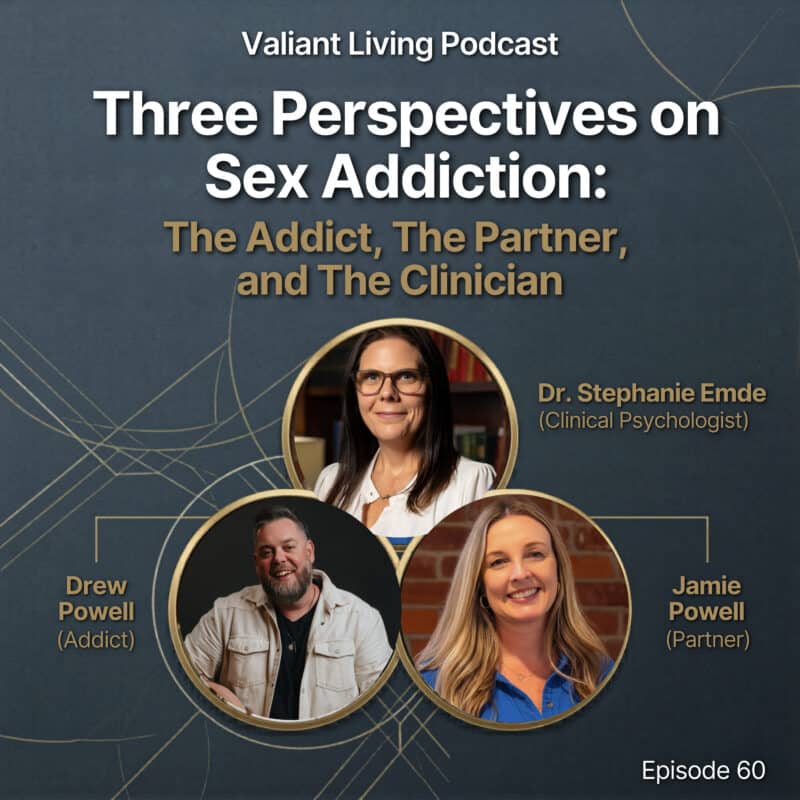

Episode 60: Three Perspectives on Sex Addiction: The Addict, The Partner, and The Therapist

The most dangerous part of sex addiction isn’t always what you can see. It’s what shame does in the dark. In this episode, we bring together three perspectives in one honest conversation: the addict, the betrayed partner, and the therapist. Drew Powell sits down with his wife Jamie and clinical psychologist Dr. Stephanie Emde to unpack the reality of addiction, betrayal trauma, and what it actually takes to begin rebuilding trust. This episode explores why willpower and weekly therapy often fall short, what “provisional trust” looks like when everything feels broken, and how real healing starts with restoring safety, not just stopping behavior.

Download Your FREE Resource

The most dangerous part of process addiction often isn’t what people can see, it’s what shame does in the dark. We sit down as a host, a betrayed partner, and a clinical forensic psychologist to map the real terrain of sex addiction recovery, betrayal trauma, and the moment families realize that weekly therapy and willpower aren’t enough. If inpatient rehab sounds “extreme,” we unpack why treatment can still be life or death when the risk is spiraling secrecy, escalating behavior, and suicidality driven by exposure and self-hatred.

We also get practical about the family system. Betrayal trauma can feel like losing your grip on reality because denial and minimization keep rewriting the story. From a clinical perspective, we talk about why partners doubt themselves, what “provisional trust” looks like when everything is on fire, and why specialized support like a CSAT can change the whole trajectory. Healing requires more than stopping behaviors; it requires rebuilding safety, restoring self-trust, and addressing the attachment injuries that addiction creates.

Then we go straight at the barrier we hear most: “I can’t leave my job.” We explore how work becomes identity, why control and negotiation are part of the addicted brain, and why the longer treatment is delayed the more relationships and reputations fracture. We end with a legacy question that cuts through the noise: when your life is over, what do you want your family to remember, your title or your presence?

If this conversation helps, subscribe, share it with someone who’s stuck, and leave a review so more families can find real support. What’s the biggest fear that keeps people from getting treatment?

If you or someone you love is struggling with addiction, you don’t have to face it alone.

Valiant Living helps men and their families move from crisis to stability through clinically driven care, community, and hope.

Learn more about our programs at www.valiantliving.com
or call us confidentially at (720) 796-6885 to speak with someone who can help.