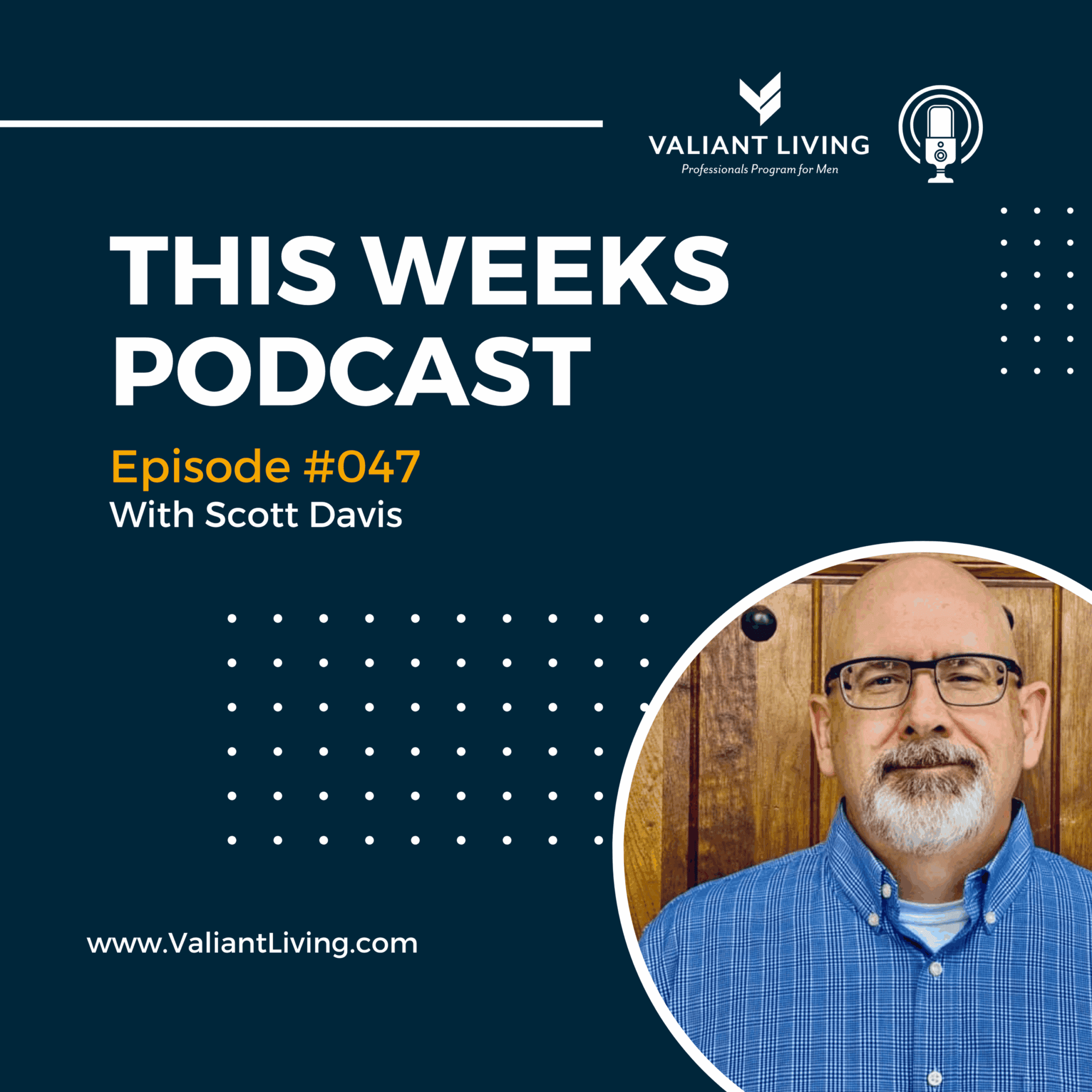
The Power of Group Therapy Scott Davis Chief Clinical Officer | Ep. 47
Valiant Living Podcast · Episode 47
The Power of Group Therapy Scott Davis Chief Clinical Officer
Watch on YouTube Apple Podcasts Spotify RSS
Prefer to listen?
The Healing Power of Connection: How Group Therapy Transforms Lives
In our increasingly disconnected world, the path to healing often feels lonely and overwhelming. Scott Davis, Chief Clinical Officer at Valiant Living, understands this deeply. With years of experience guiding men through addiction and mental health challenges, he has witnessed firsthand how powerful human connection can be in the healing process.
“The opposite of addiction is not sobriety, the opposite of addiction is connection,” Davis emphasizes. This statement encapsulates the foundational philosophy that drives Valiant Living’s approach to recovery. While individual therapy certainly has its place, the transformative power of group therapy creates an environment where true healing can flourish through shared experiences and mutual understanding.
Many individuals enter group therapy with tremendous apprehension. There’s a natural fear of being vulnerable in front of strangers, of being judged, or of being seen in our most broken states. Davis acknowledges this fear directly, even sharing how he experiences it himself when entering new groups. By modeling vulnerability from the start, he creates a space where others can feel safe to do the same. This approach immediately levels the playing field and signals to participants that perfection isn’t expected, authenticity is.
Perhaps the most powerful aspect of group therapy is its ability to combat shame. Davis describes shame as the feeling that “we are awful” or that “there’s something wrong with me.” This shame teaches us to hide, to isolate, to believe we are fundamentally different from others. Yet when we summon the courage to share these shameful feelings in a group setting, something remarkable happens, we discover we are not alone. The very things we thought made us unlovable or uniquely broken are often the same struggles others are facing.
As Davis explains, “When I say ‘I feel like I should just lock myself in a closet somewhere because I’m so bad,’ and this guy says ‘Oh my God, I was thinking the same thing,’ and then he shares his story and I go ‘Wait a minute, his story is my story’, it’s like, ‘Well, wait a minute, he’s here and he’s valuable… maybe I’m valuable too.’” This powerful realization cannot happen in isolation.
The interplay between individual and group therapy at Valiant Living creates a comprehensive healing approach. Individual therapy provides a space to process deeply personal traumas that might initially feel too overwhelming to share in a group. However, Davis notes that individual therapy often serves as preparation for bringing these issues into the group setting, where deeper healing and connection can occur. The two therapeutic approaches complement each other, working together toward holistic recovery.
Conflict within groups, rather than being avoided, is embraced as an opportunity for growth. Davis suggests that conflict in a group setting often reflects unresolved issues from our past. “Your conflict isn’t necessarily with the guy in front of you. That conflict is probably from your past and now it’s just been brought up to you,” he explains. When these conflicts emerge in a safe, guided environment, they become opportunities to heal old wounds and learn new ways of relating to others.
Perhaps most powerfully, Davis describes group therapy as “sacred work”, a privilege where participants witness each other’s truth and pain. There is a “tragic beauty” in sharing our deepest hurts and finding connection through them. It’s through this vulnerable sharing that the shame that once isolated us becomes the very bridge that connects us to others.
For those struggling with addiction, trauma, or mental health challenges, the message is clear: healing happens in connection. The path forward isn’t found in isolation but in community with others who understand. In the words of Scott Davis, “We need each other.” It is in embracing this truth that transformation becomes possible.
You Don’t Have to Do This Alone
Help is closer than you think
If you or someone you love is struggling with addiction or trauma, Valiant Living helps men and their families move from crisis to stability through clinically driven care, community, and hope.