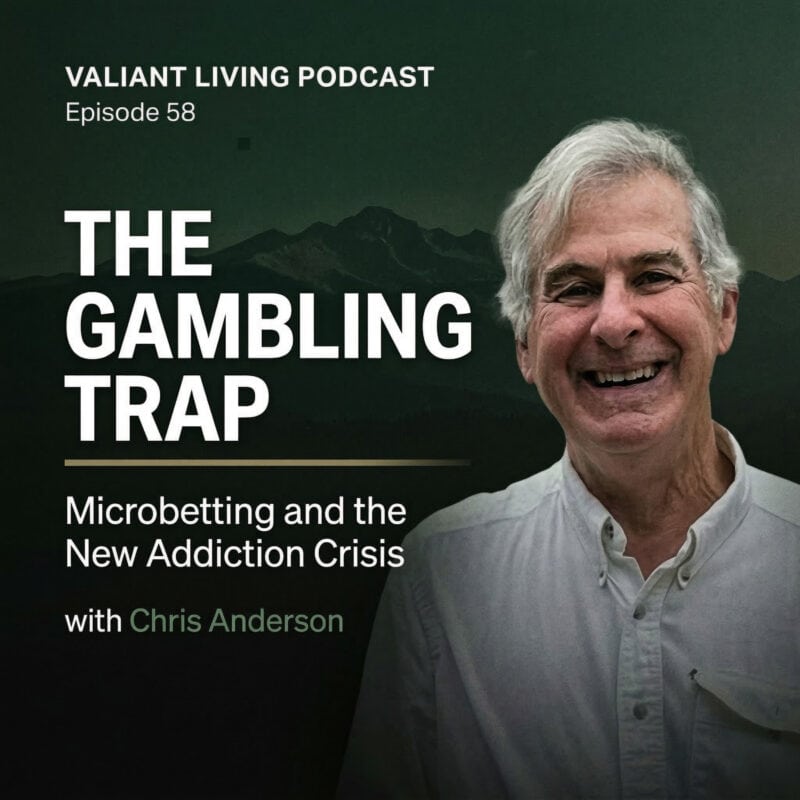

Podcast cover for Valiant Living Podcast Episode 58 titled "The Gambling Trap: Microbetting and the New Addiction Crisis" featuring Chris Anderson

Microbetting and the New Gambling Trap

How sports betting apps are quietly fueling a new addiction crisis and what families need to know before it’s too late.

Gambling has changed.

What used to require a trip to a casino now lives in your pocket. With the rise of sports betting apps, microbetting, and 24/7 access, gambling has become faster, more accessible, and more dangerous than ever before.

In this episode of the Valiant Living Podcast, Drew Powell sits down with gambling addiction expert Chris Anderson to unpack what is happening right now and why so many individuals and families are getting caught in the cycle.

A partner-centered conversation about betrayal, disclosure, and healing. This episode explores what it takes to move from chaos to clarity by learning healthy boundaries, releasing misplaced responsibility, and choosing renewal.

Sports betting has changed faster than most families can track. What used to mean calling a bookie and waiting hours or days for a result now lives in your pocket, wrapped in bright promos and constant ads. Microbetting and prop bets shorten the gap between wager and outcome to near zero, which intensifies the dopamine-driven reward loop that fuels gambling addiction. This “purification” makes sports betting addiction feel effortless: instant stakes, instant results, and endless opportunities across global games and online platforms. For people vulnerable to problem gambling, that speed is not a feature, it is the hook.
 
One reason gambling disorder is so dangerous is psychological: you can place the next bet and win. That possibility keeps hope tied to the very behavior causing harm, so the “solution” feels like more gambling rather than help. Over time, wins reinforce the brain’s reward system and teach a person to chase anticipation itself, similar to other dopamine-centered addictions. The result is a cycle where winning doesn’t end the behavior and losing demands a “make it back” bet. This dynamic helps explain why treatment is often delayed and why financial damage, secrecy, and despair can escalate quickly.
 
Recovery also has a cognitive layer many people miss: mind betting. Even without money on the line, imagining spreads and outcomes can create a mood-altering buzz and train the brain to live in “what happens next” instead of the present moment. That future-focused trance can undermine the deeper goal of recovery: building a life anchored in reality, responsibility, and choice. Gambling shifts control to an external event you cannot influence, which reinforces a victim mindset and erodes agency. Effective gambling addiction recovery teaches people to tell the whole story past the fantasy of the next win and toward the predictable long-term cost.
 
Families often experience gambling as the hidden addiction. Lying is central, and spouses can end up questioning their own reality because there are no obvious physical signs like smell or impairment. By the time the truth surfaces, the crisis can include debt, missed bills, damaged credit, or even illegal acts to fund bets. Newer threats include blackmail and extortion tied to online bookies, where parents may receive demands and threats to reputation. Practical steps matter: gather financial facts, run credit reports, avoid bailouts that reset access to money, and seek support such as Gamblers Anonymous, pressure relief processes, and qualified clinical or legal guidance. The core message remains clear for anyone stuck: there is a way through, and help exists even when the mess feels too big.